Radon gas barrier at a Badalona data centre

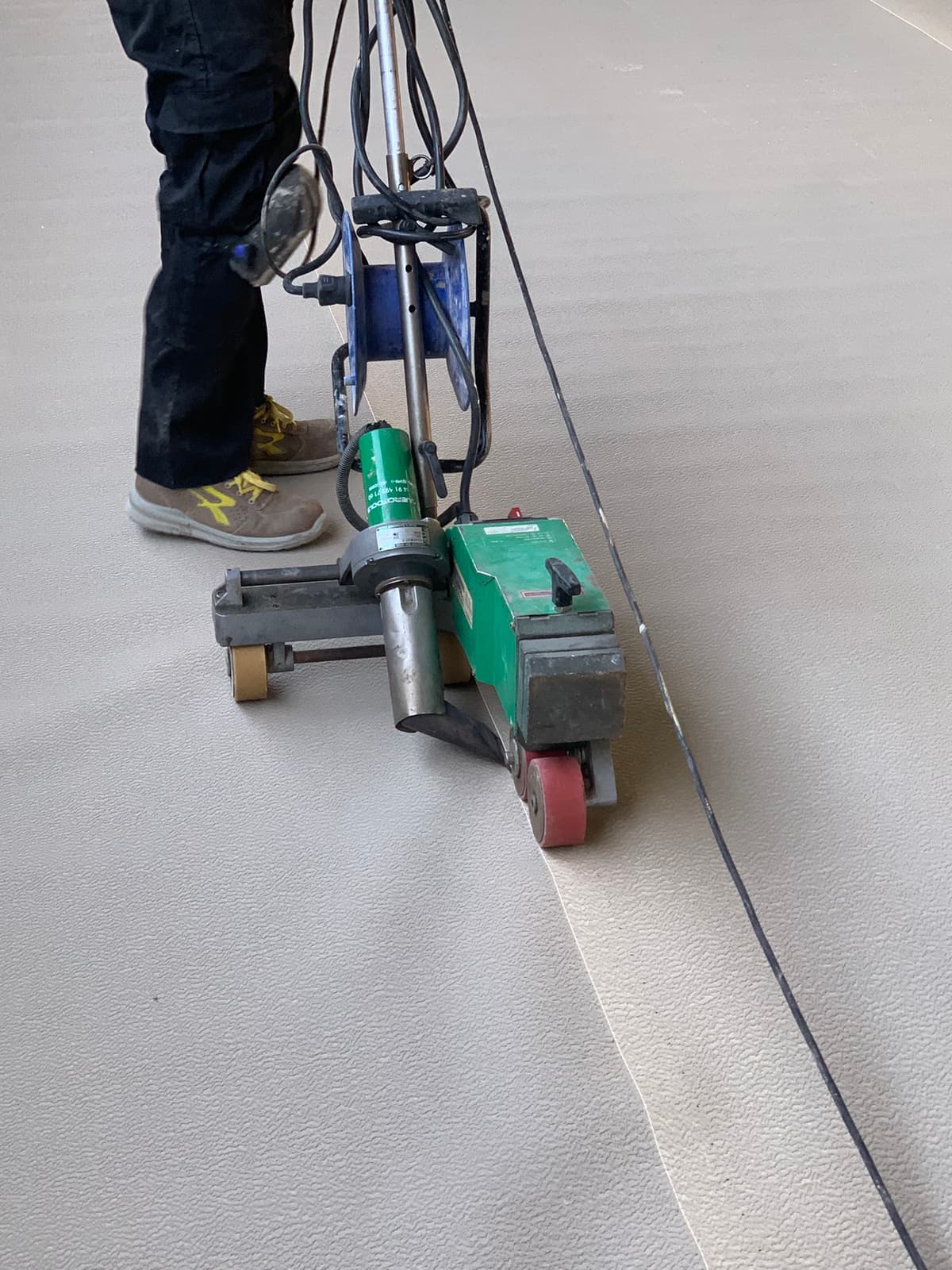
Radon membrane welded with Leister at a data centre

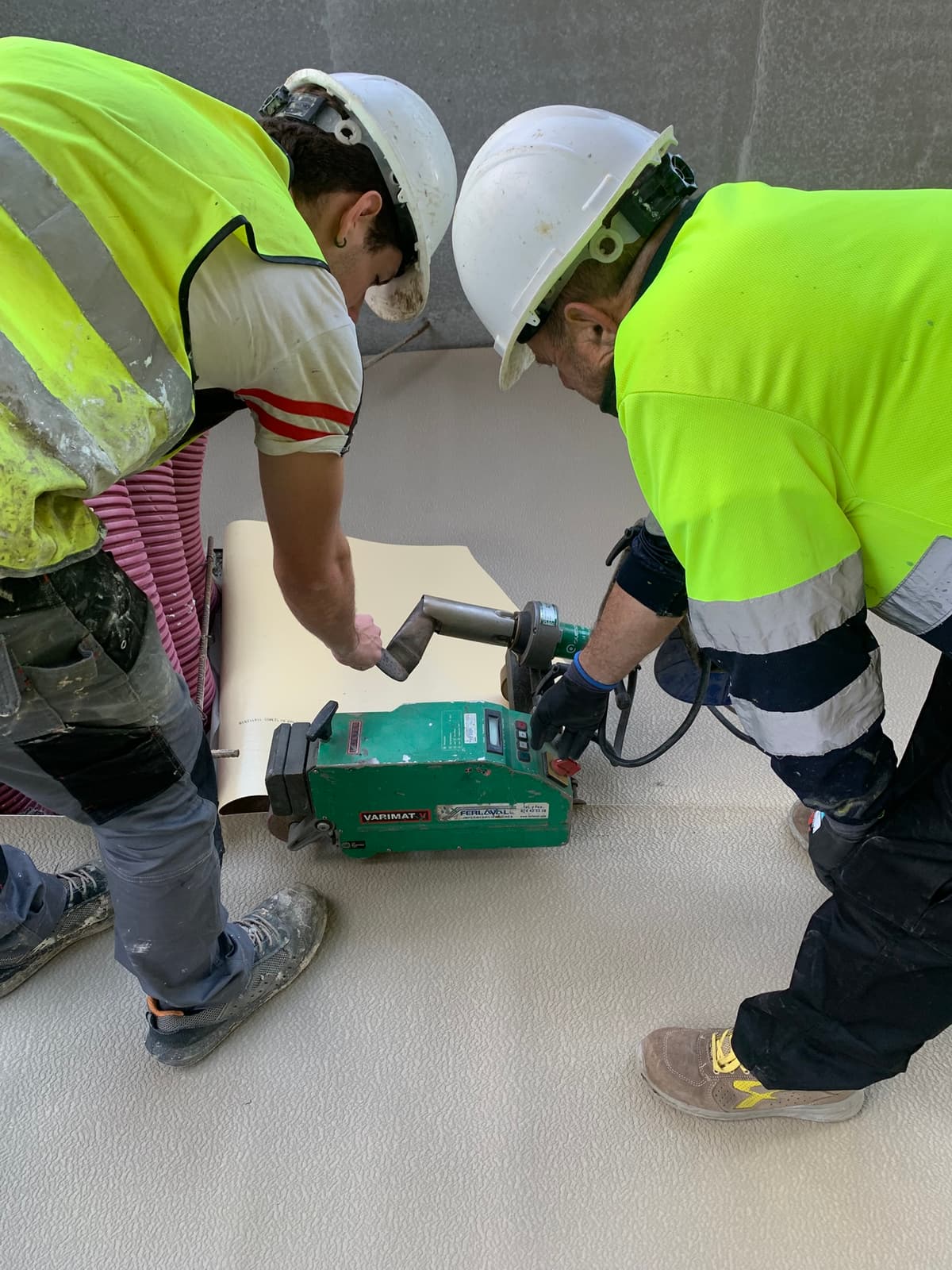
Radon gas barrier with a Sika membrane hot-air welded using a Leister automatic welder at a data centre in Badalona: slab, columns, inspection pits and perimeter upstands.

Badalona · Barcelona· 2025
Assess a similar project
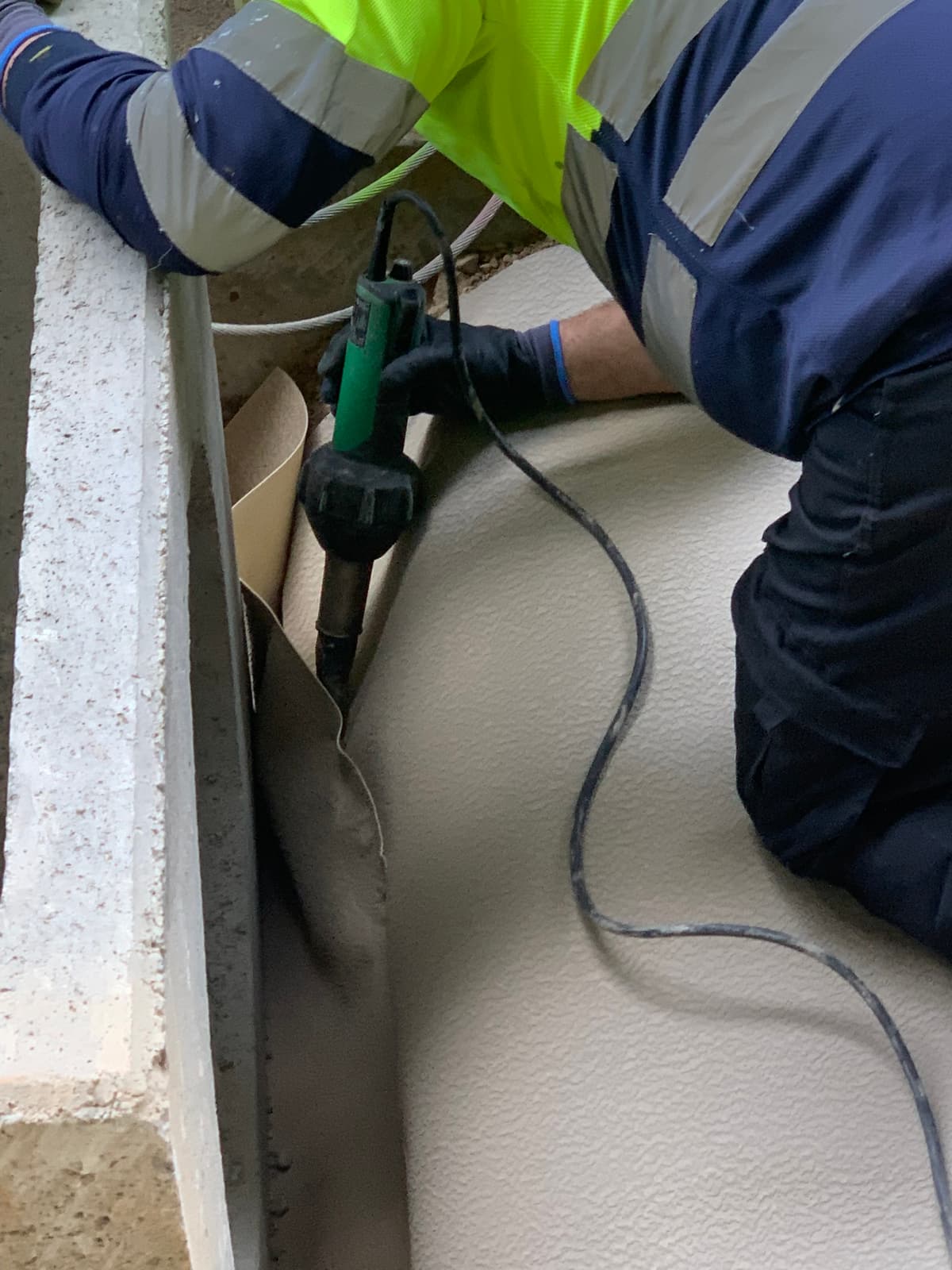
Leister Varimat hot-air automatic welder welding the overlap of the radon membrane
Leister Varimat automatic welder: the overlap between sheets is hot-air welded, with no glue or adhesive.
Project data

Technical sheet

Edificio
New-build data centre
Exigencia
Radon gas protection (CTE DB HS 6) and below-ground watertightness
Sistema
Sika thermoplastic synthetic membrane, with its system accessories
Soldadura
Hot air, with a Leister Varimat automatic welder and Leister hand welders
Superficie
About 2,400 m² of slab on the documented floor, plus columns and perimeter
Detailing
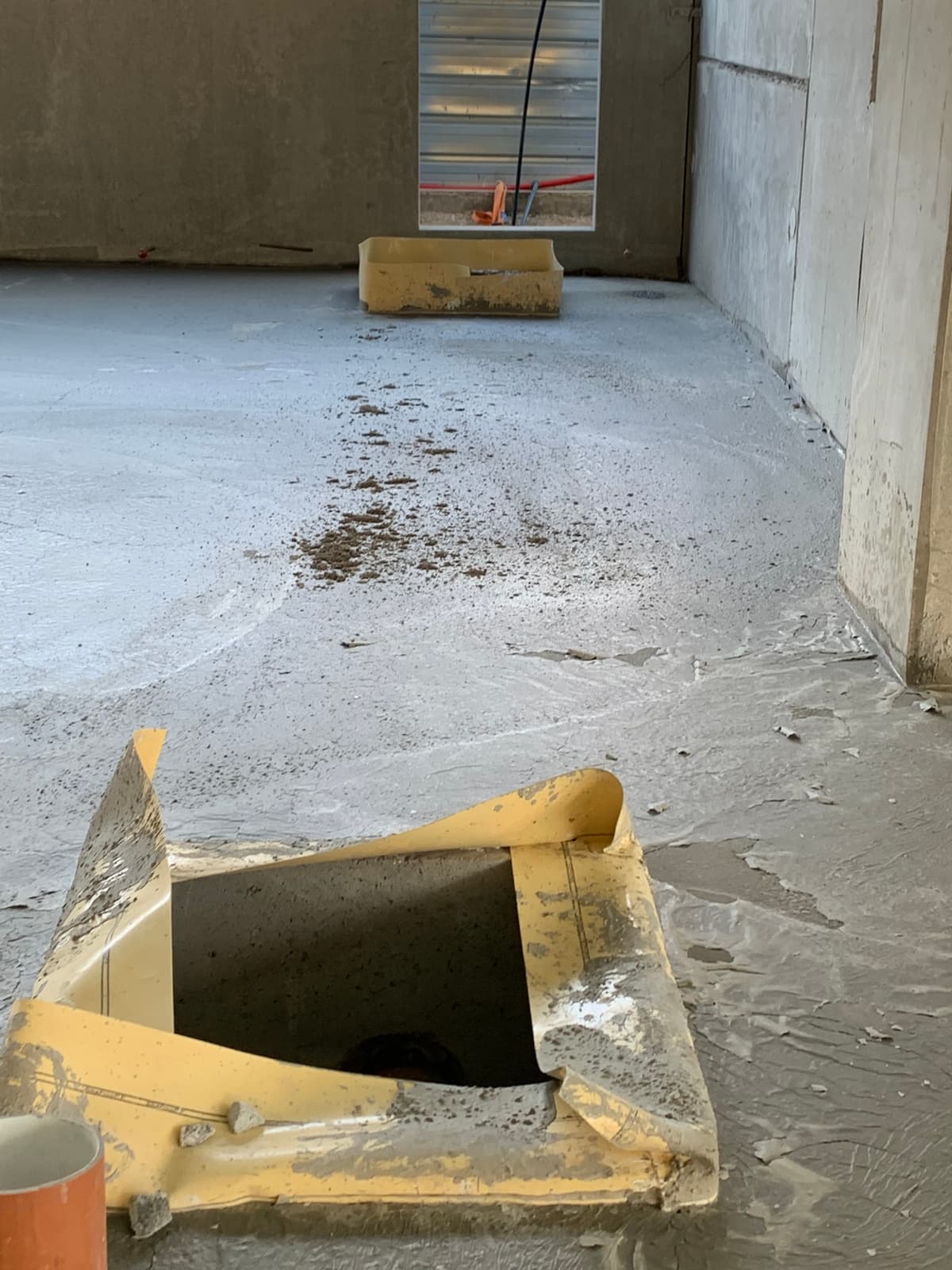
Columns, pits, pipe penetrations and perimeter upstands on walls, hand-welded
Fecha
January 2025
Aplicación
Approved applicator from our network, under our technical direction

Radon gas barrier at a data centre

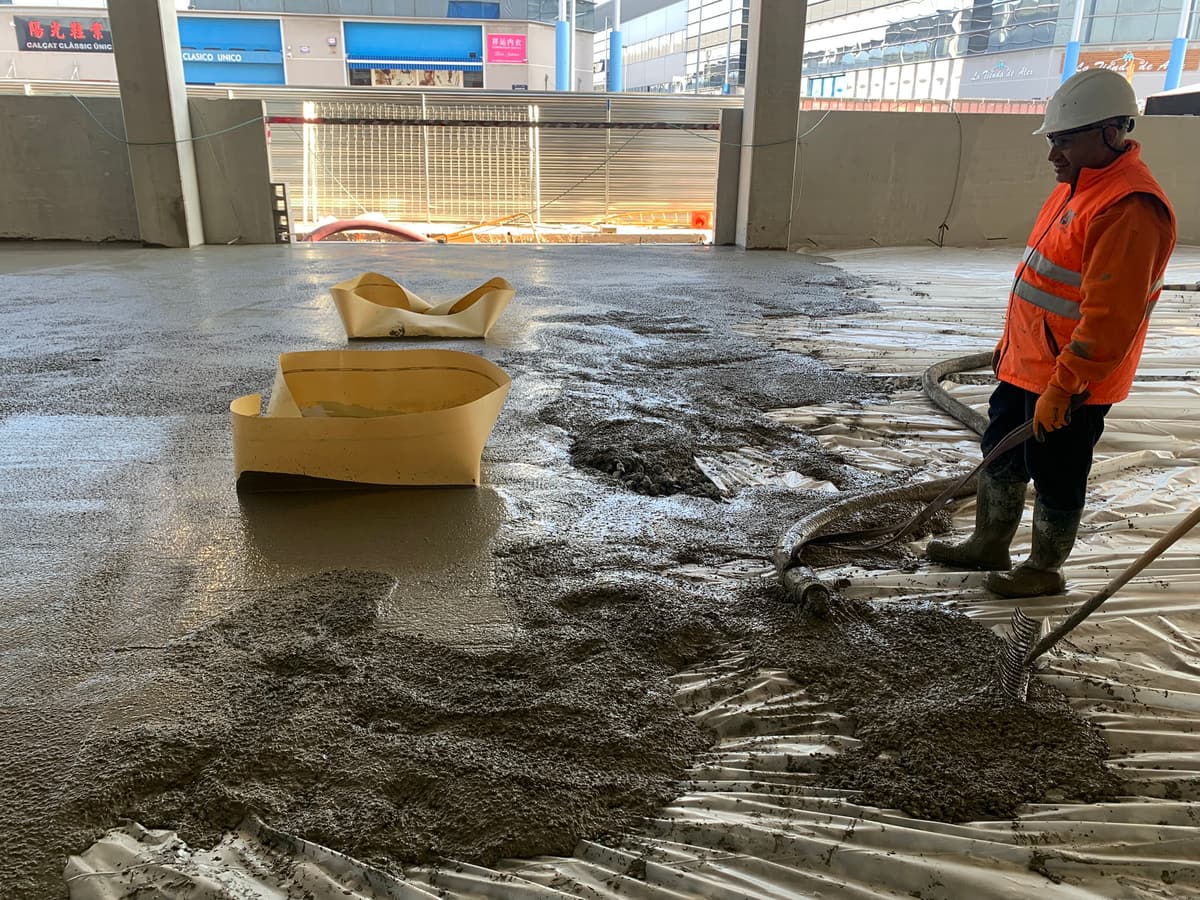
During the construction of a data centre in Badalona (Barcelona), a Sika radon gas barrier membrane was laid under the slabs and on the buried walls, also ensuring below-ground watertightness in a building where water simply cannot get in. For data protection reasons we do not name the owner.

A welded membrane, not a glued one

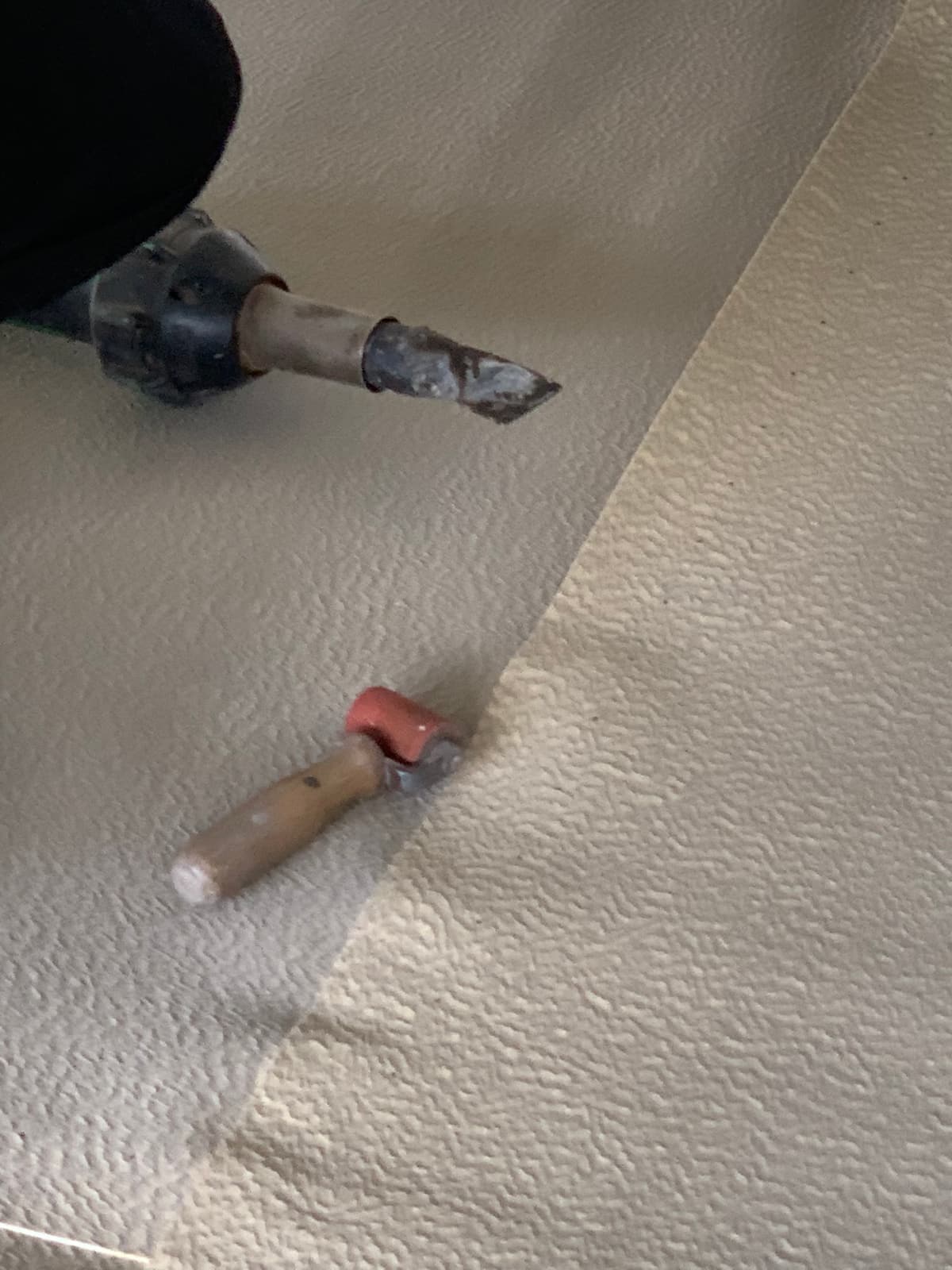
The membrane is a thermoplastic material and the overlaps between sheets are hot-air welded. On long runs a Leister Varimat automatic welder fuses the two sheets at constant temperature, speed and pressure; columns, pits, penetrations and finishing details are welded with a Leister hand welder and rolled down. The result is a continuous membrane with no glued joints, gas- and watertight. It is a highly technical application: only an approved applicator with the manufacturer's equipment and training carries it out.

Why installation matters in a radon barrier

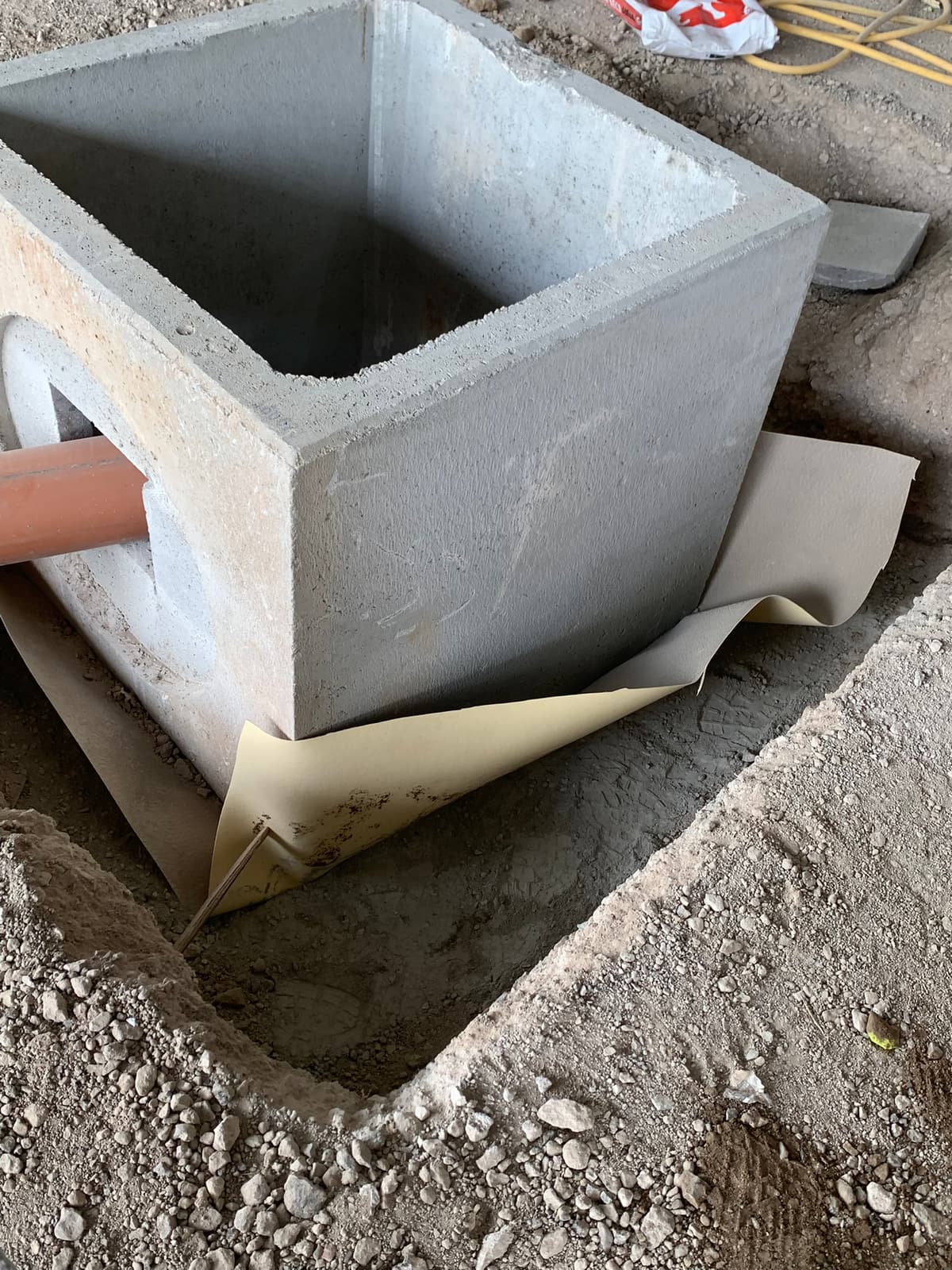
Spain's CTE DB HS 6 requires radon ingress from the ground to be limited in the affected municipalities. An approved membrane is not enough: the gas gets in through any discontinuity. The critical points are pipe penetrations, pits, joints and junctions between slab and wall, and that is where the result is won or lost.

How we work: from enquiry to handover

On every project we take on whatever is needed, a single phase or the whole process:

  1. Technical enquiry. We receive photos, drawings and the problem, and reply with an initial assessment.
  2. Consulting and diagnosis. Site visit, testing and choice of the right system for the substrate and use.
  3. Specification and fixed-price quote for materials and execution.
  4. Execution by an approved applicator from our network, trained and approved by the system manufacturer.
  5. Site management and quality control: substrate, moisture, thickness, curing and detailing.
  6. Finishing, final documentation and handover.

Double guarantee: the manufacturer backs that the installed system meets its standards, and we guarantee it has been applied correctly. That is why our repairs, waterproofing and floors last for years.
Step by step

How a radon membrane is laid and welded

  1. Concrete slab on the floor before laying the barrier membrane
    Step 1

    Prepare the slab

    Clean, flat slab with no sharp edges that could puncture the membrane.

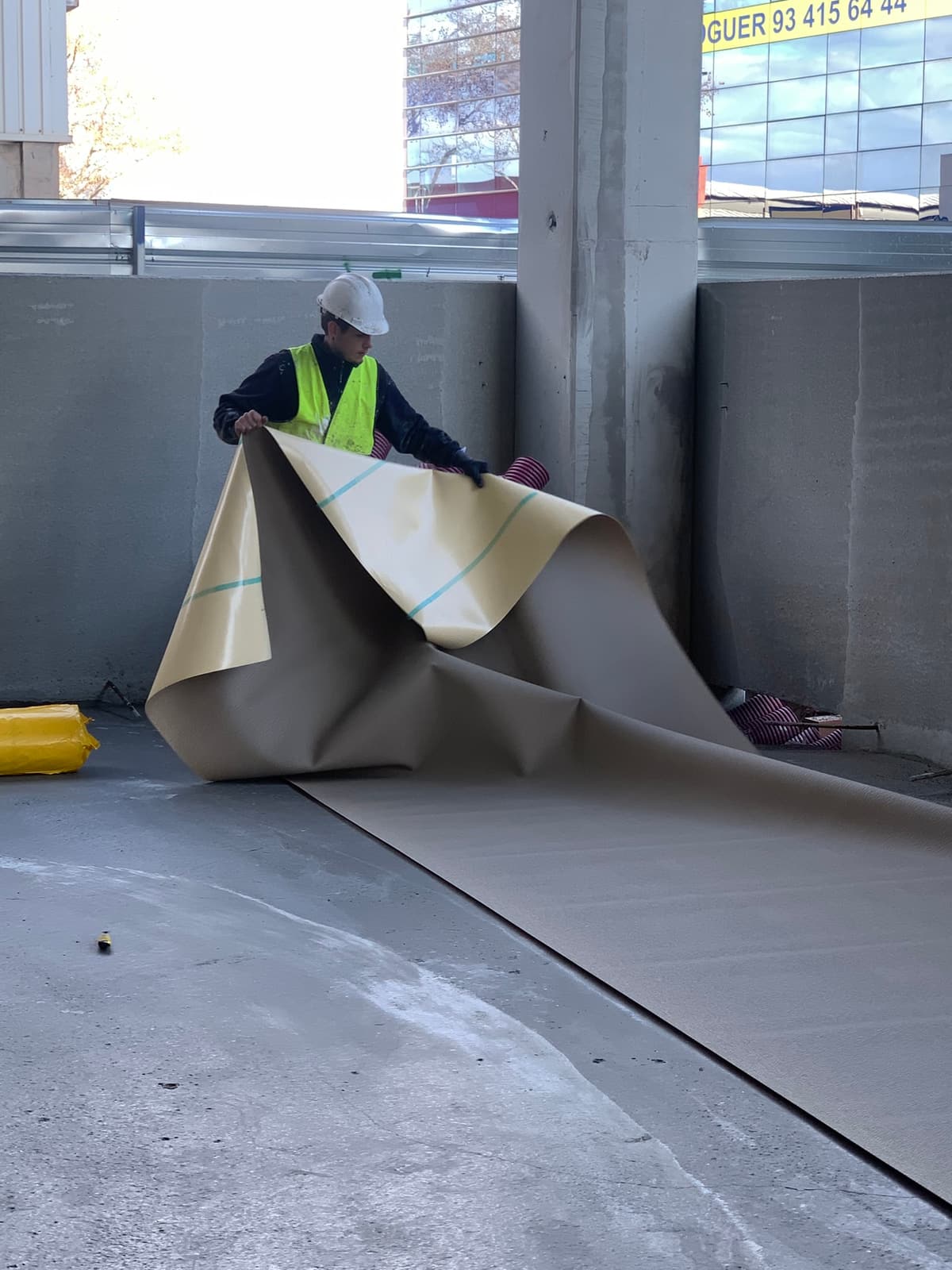
  2. Worker rolling out a membrane roll over the concrete slab
    Step 2

    Roll out the membrane

    Sika system rolls laid out with the overlap marked between sheets.

  3. Leister Varimat hot-air automatic welder welding the overlap of the radon membrane
    Step 3

    Weld the overlaps with Leister

    Hot-air automatic welder on long runs; the membrane fuses into a single piece.

  4. Hand welding of the membrane where it meets a column
    Step 4

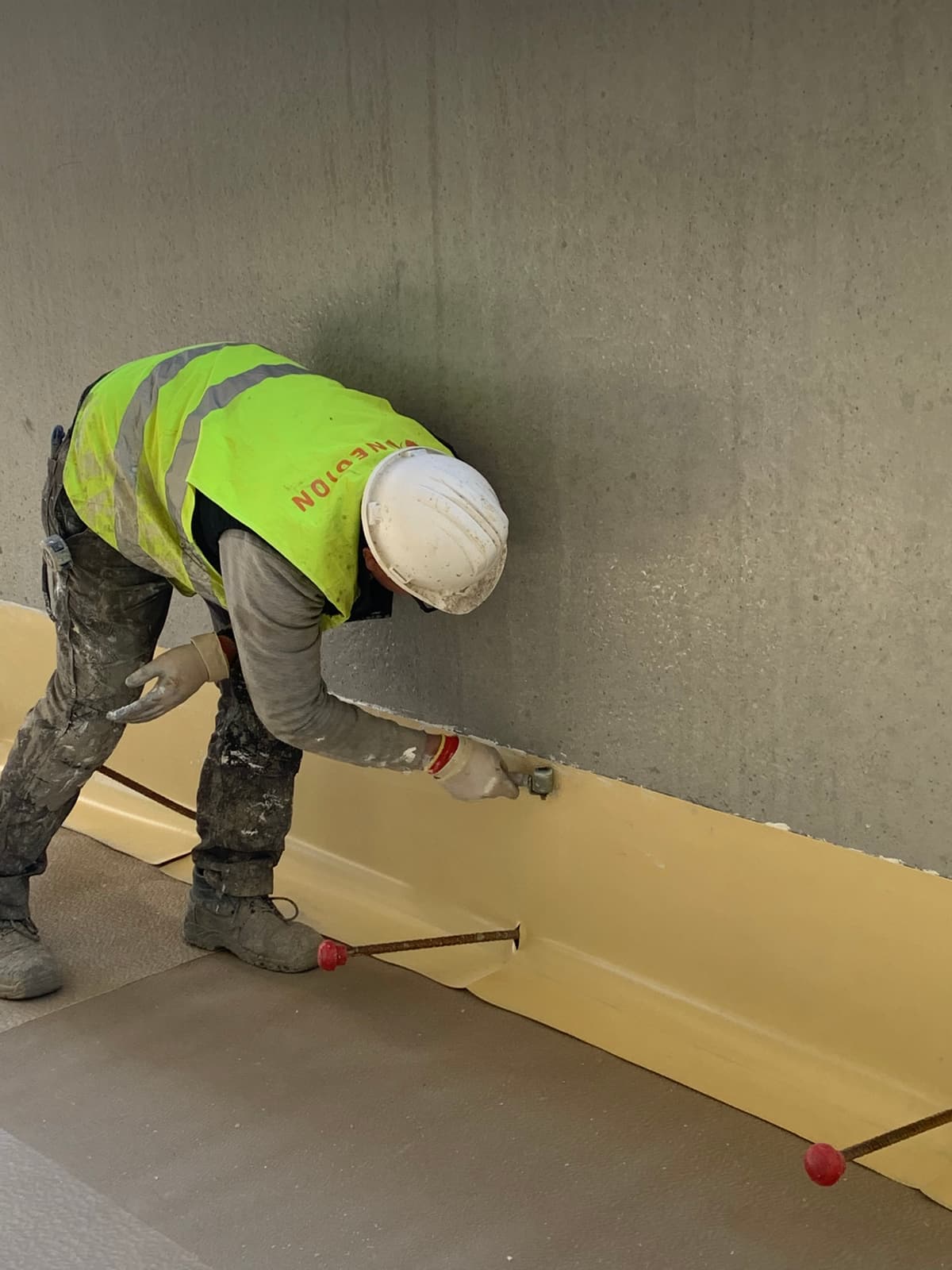
    Hand-finish the details

    Columns, pits and penetrations are welded with a Leister hand welder and rolled down.

  5. Radon membrane upstand along the wall perimeter
    Step 5

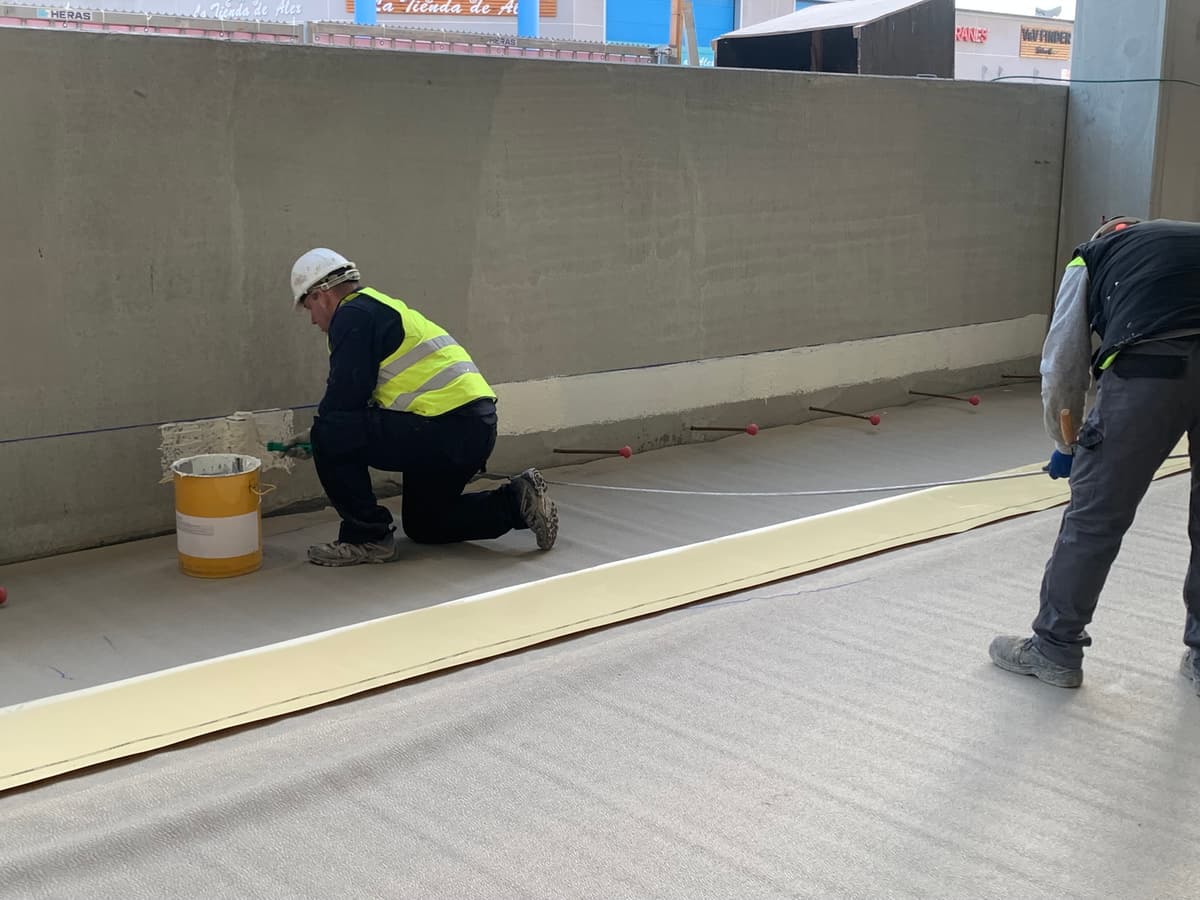
    Turn up at the perimeter

    Primer and membrane upstand on the walls, with no joint between slab and wall.

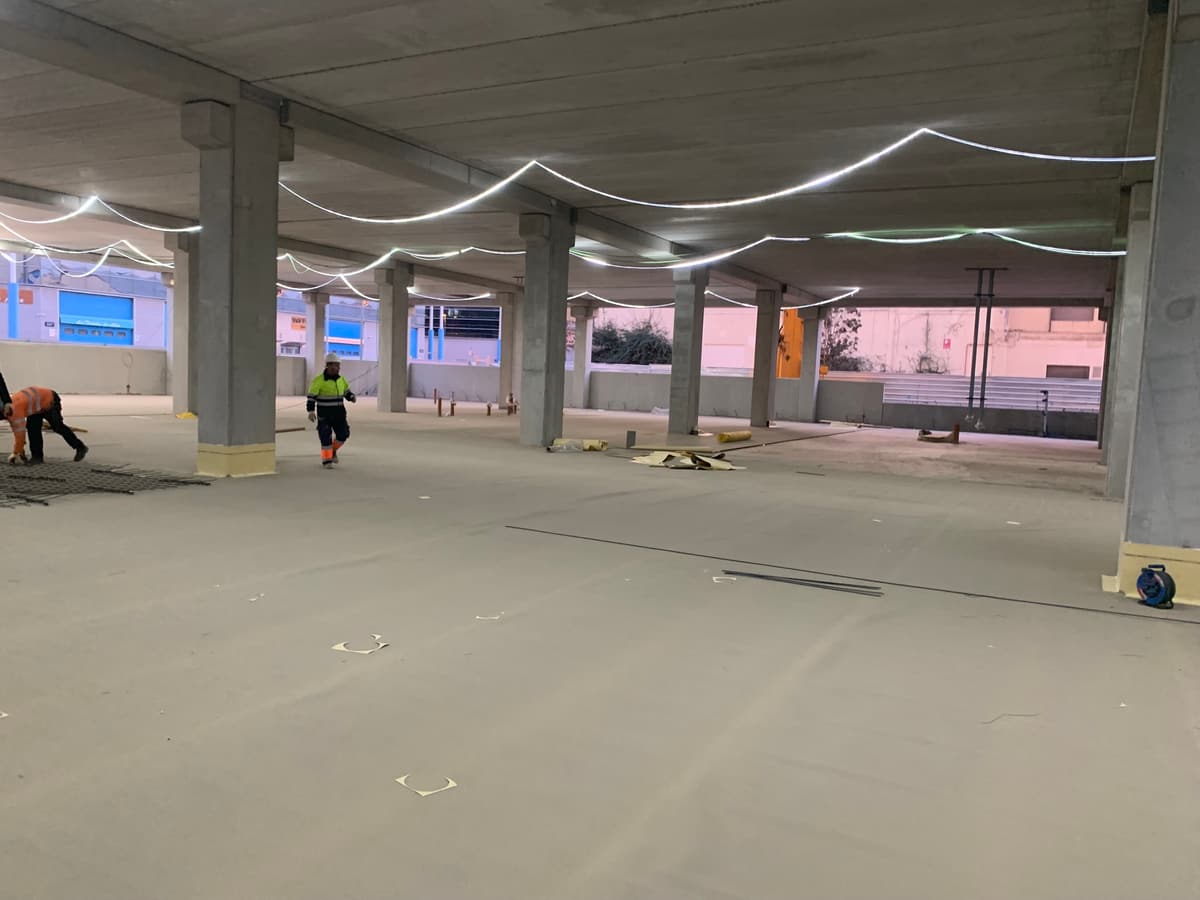
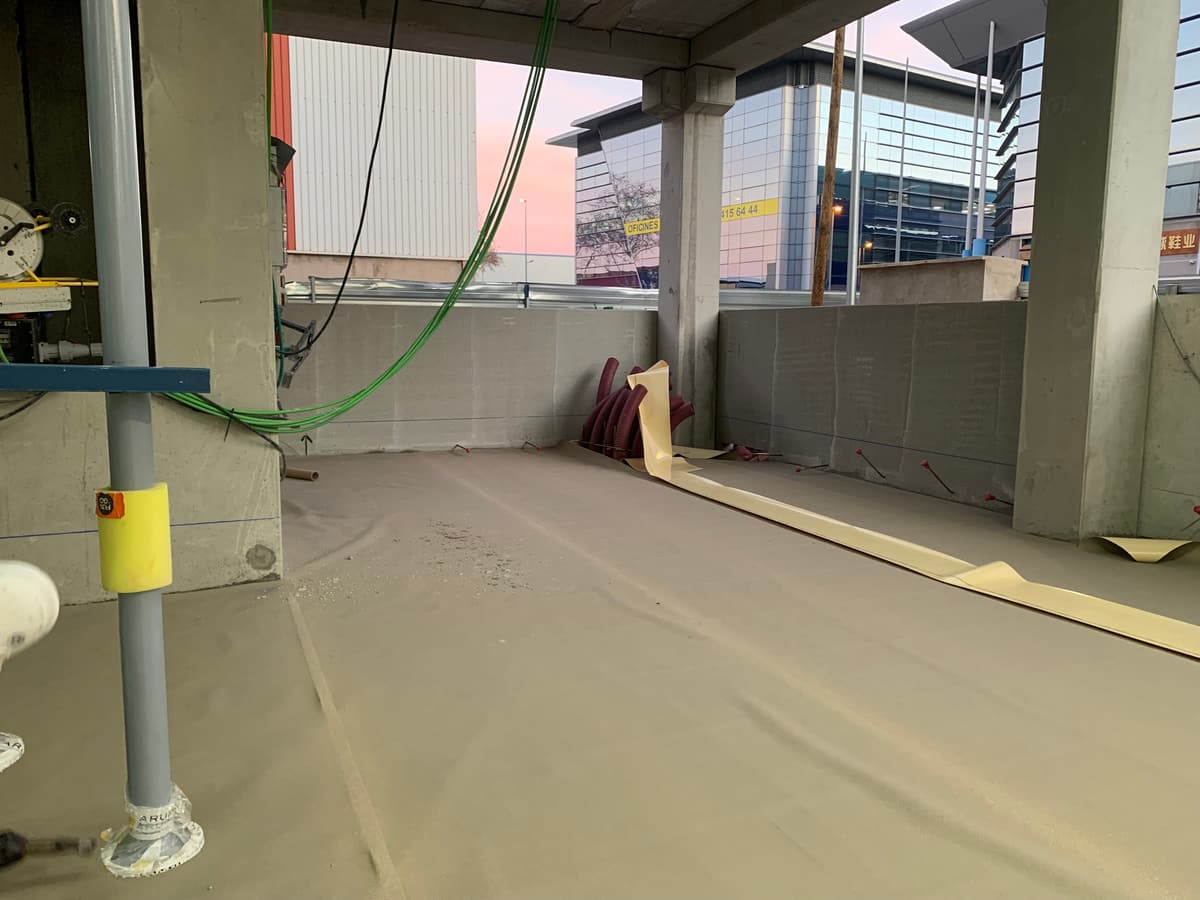
  6. Open-plan data centre floor with the entire radon membrane laid
    Step 6

    Check every weld

    The continuity of the whole barrier is checked before concrete is placed on top.

On-site record

Project photos and video

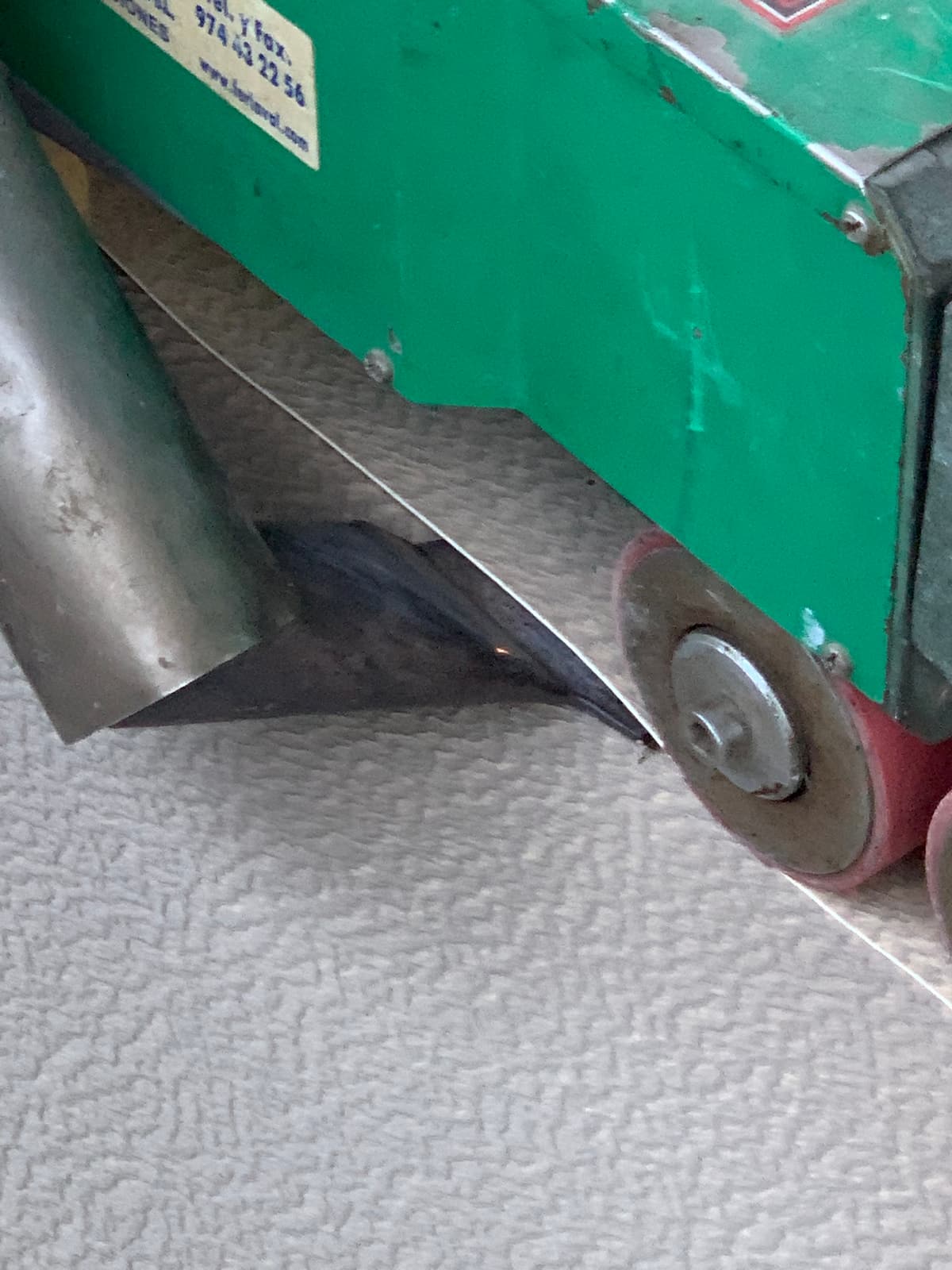
Close-up of the Leister automatic welder fusing the membrane overlap
Welding detail: hot air and a pressure roller fuse the two sheets into a single piece.
Worker hand-welding the membrane overlap on the slab with a Leister welder
Hand welding with Leister on short runs and finishing details.
Pressure roller passing over the freshly made membrane weld
Pressure roller over the fresh weld.
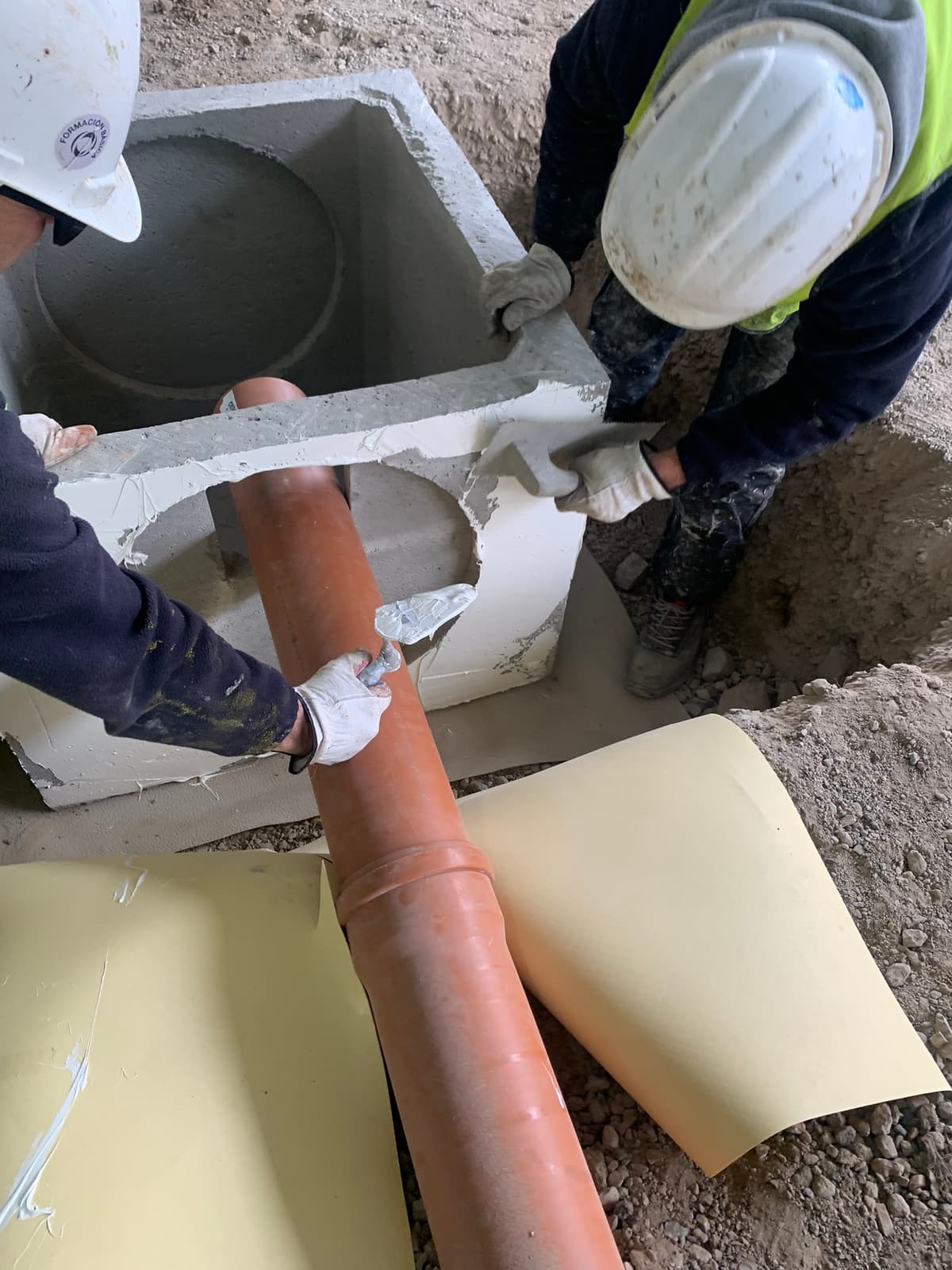
Precast pit with the radon membrane welded around it
Pit integrated into the barrier: the membrane is welded all round.
Radon membrane meeting a pit and a pipe
Membrane, pit and pipe detail: no penetration is left unsealed.
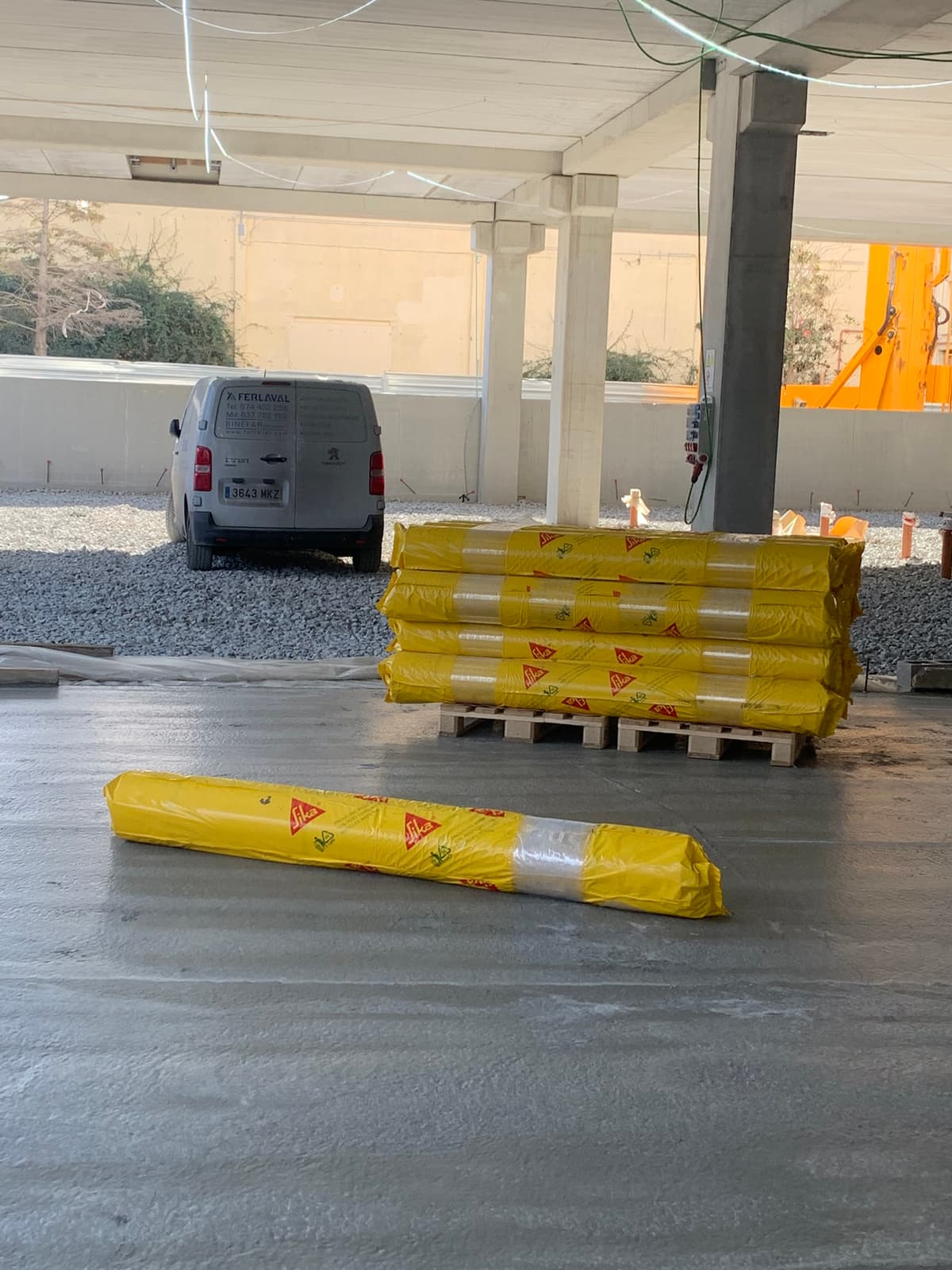
Sika membrane rolls stored on the data centre floor
Sika system membrane rolls on site.
Worker applying primer along the wall perimeter before the upstand
Priming the perimeter before turning the membrane up the wall.
Data centre floor with the radon membrane finished along the wall
Membrane finished at the floor perimeter.
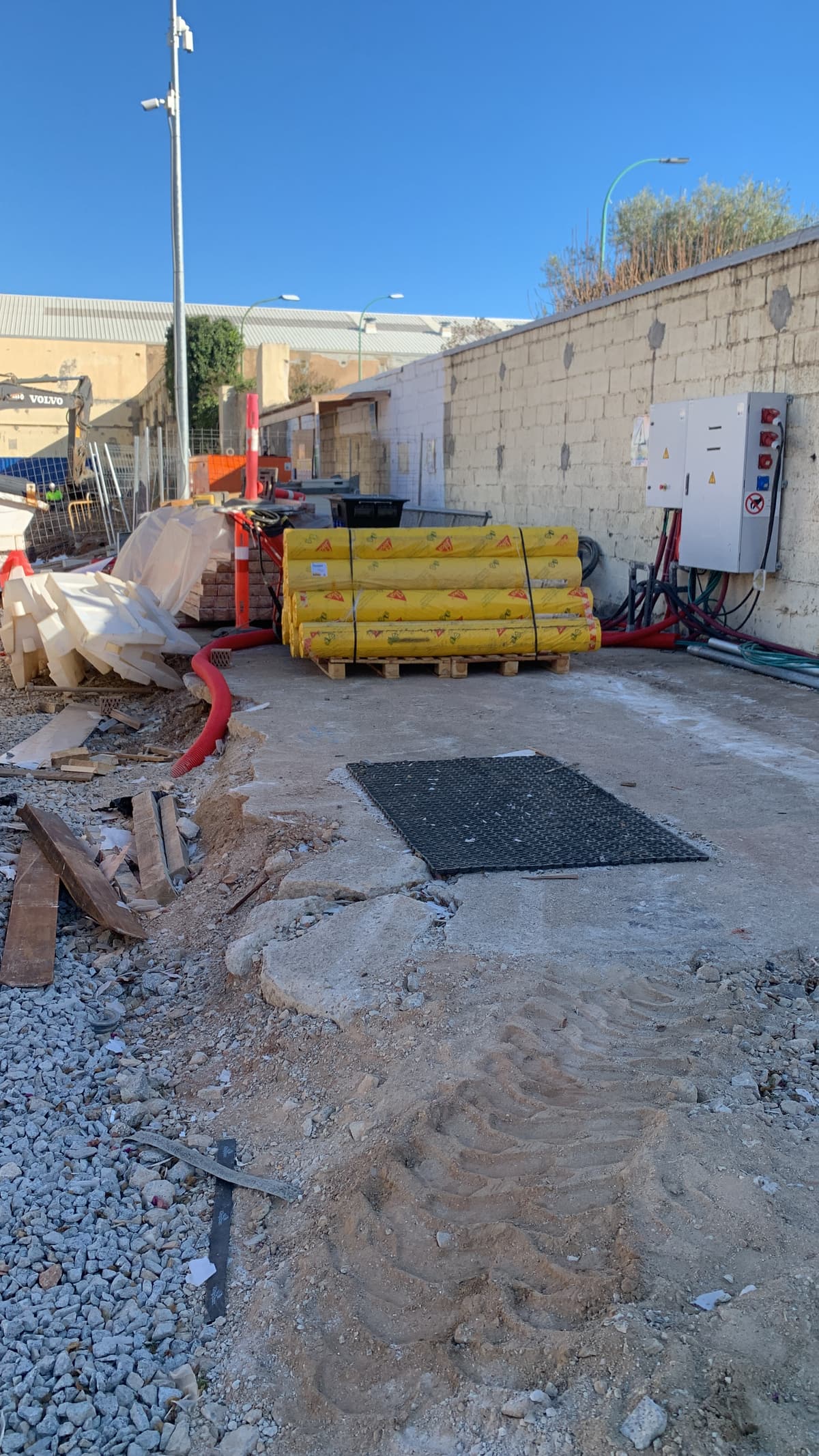
Sika membrane rolls stored on a data centre site in Badalona
Sika system membrane stored on site.
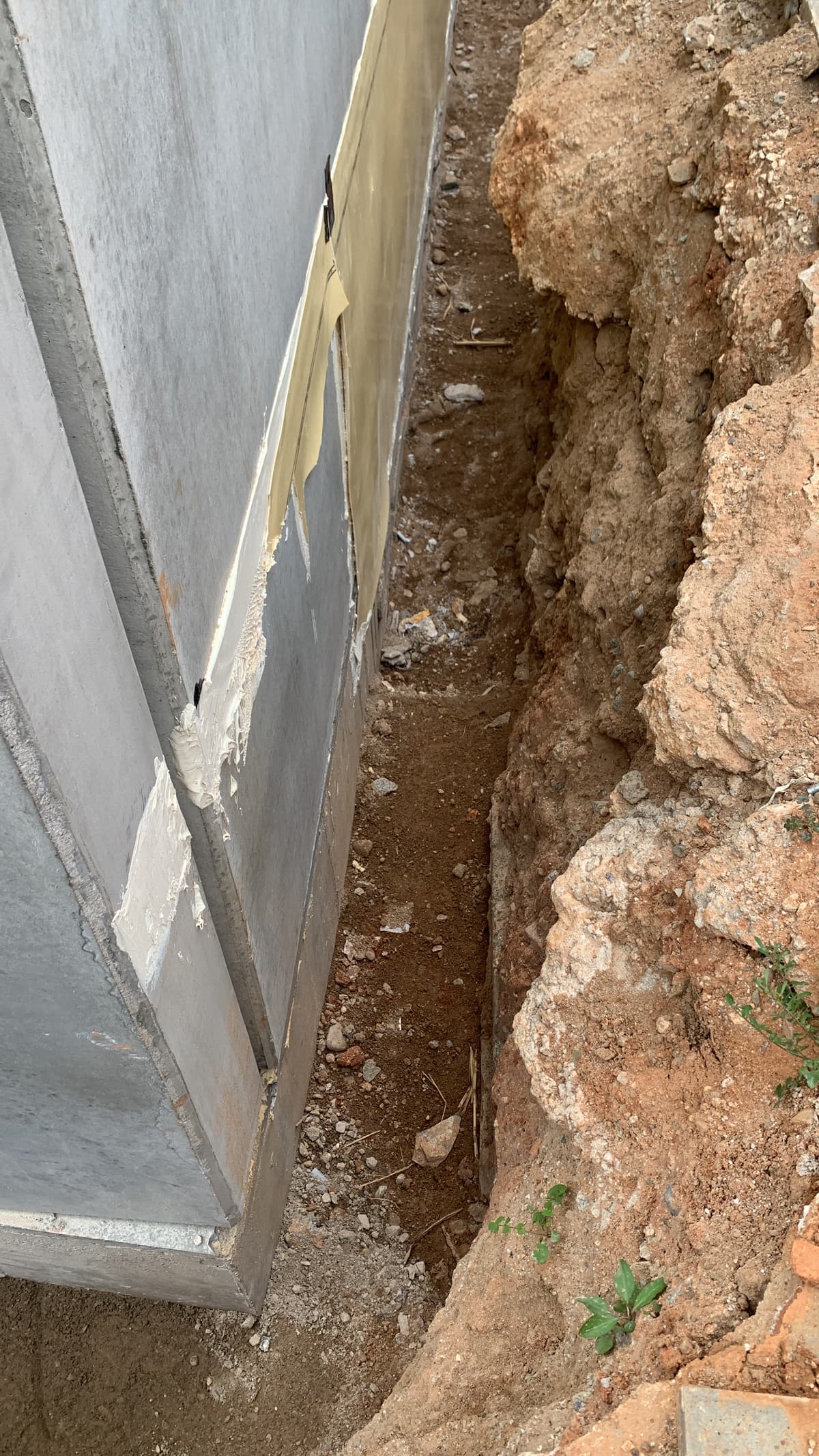
Barrier membrane laid on a buried wall next to the excavation
Membrane on the back of the buried wall, before backfilling.
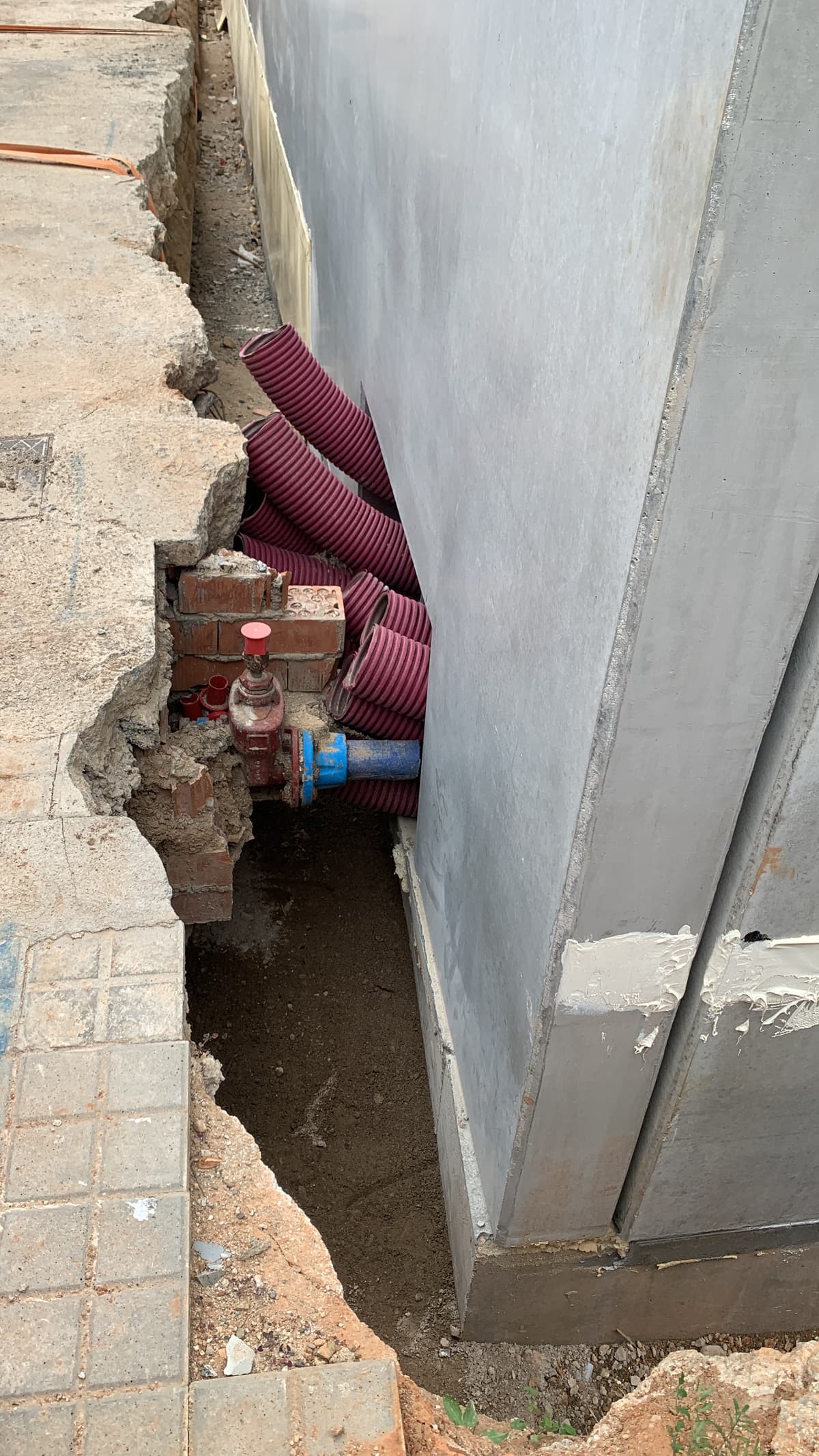
Pipe penetration sealed to the radon barrier membrane with system parts
Pipe penetration sealed to the membrane: this is where radon barriers fail.
Unloading waterproofing membrane rolls from a lorry on site
Unloading the material on site.
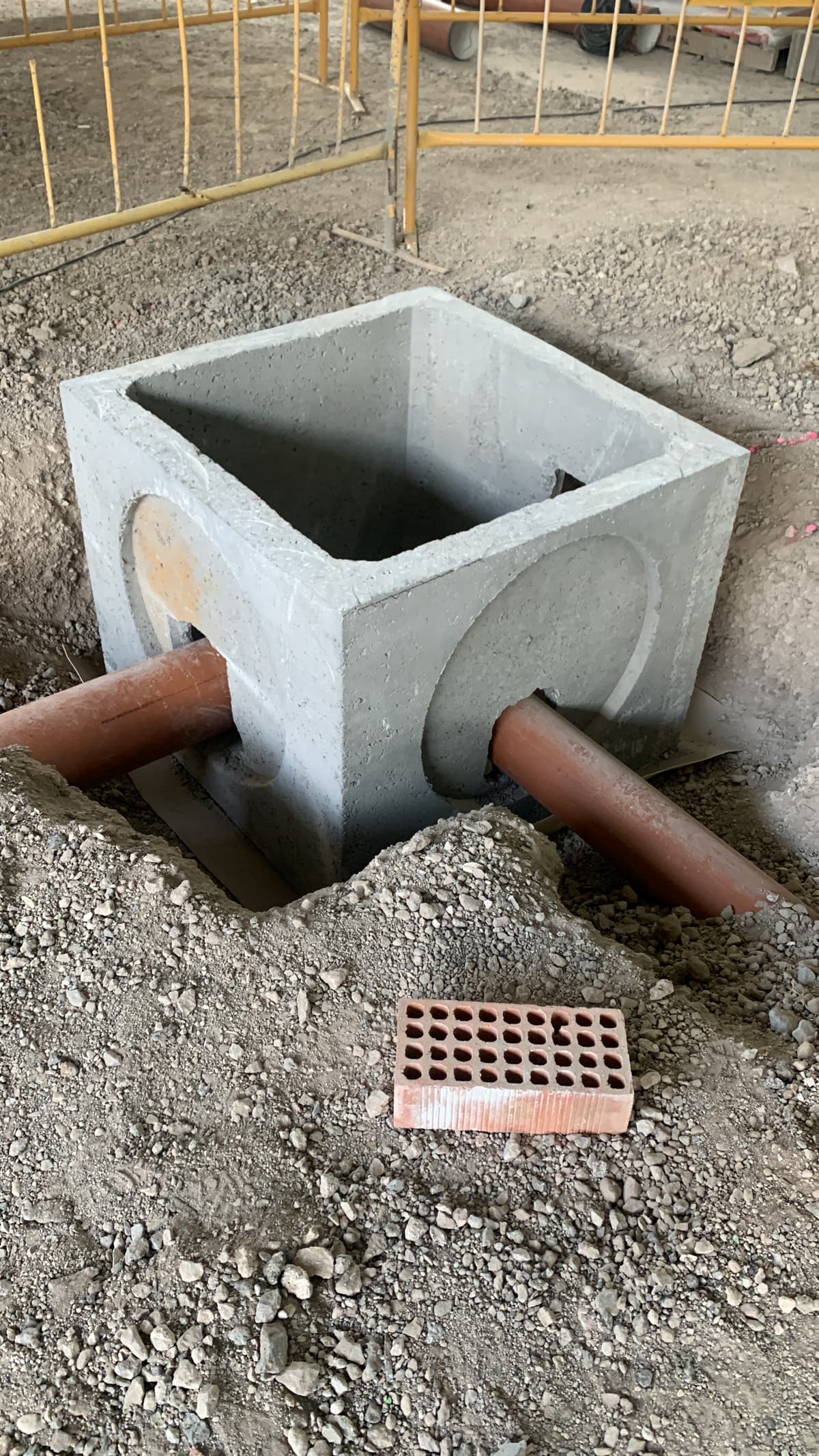
Precast pit with pipe penetrations before being sealed to the radon barrier
Pit with service penetrations, to be integrated into the barrier.
The Leister welder moving along the overlap (40 s, no sound).
Common questions

Frequently asked questions

When is radon protection mandatory?

Spain's CTE DB HS 6 requires it in the municipalities on its list of zones, depending on the exposure level.

Where does radon get in if there is a membrane?

Through discontinuities: penetrations, pits, joints and slab-to-wall junctions. That is why installation matters as much as the product.

Why is the membrane welded with Leister rather than glued?

Because hot-air welding fuses the two sheets into one: the overlap is as gas- and watertight as the membrane itself. A glued joint depends on the adhesive and the substrate.

What checks does a membrane weld need?

Welder temperature, speed and pressure set for the membrane, and inspection of every overlap. Details are welded by hand and checked one by one.

Does the radon membrane also waterproof?

Yes. A continuous below-ground barrier limits both gas and water ingress.

Who carries out the work?

An approved applicator from our network, trained and approved by the system manufacturer. We handle the consulting, the specification and site management, and we guarantee the system is properly applied.

Do you work outside Catalonia?

Yes. We work throughout Spain, especially in Catalonia, the Valencia region and Aragon, with approved applicators in each area.

Does your project require radon protection?

We specify the barrier to CTE DB HS 6, an approved applicator installs it and we supervise the work detail by detail, especially penetrations, pits and joints.

Request a technical study
Call WhatsApp Request a quote