Resin floor repair in a hospital laboratory

Seamless resin floor repaired without closing the laboratory

Repair of the seamless resin floor of a hospital laboratory in Barcelona: cut-out, epoxy primer and jointless self-levelling resin, without closing the laboratory.

Barcelona· 2022 project
Assess a similar project
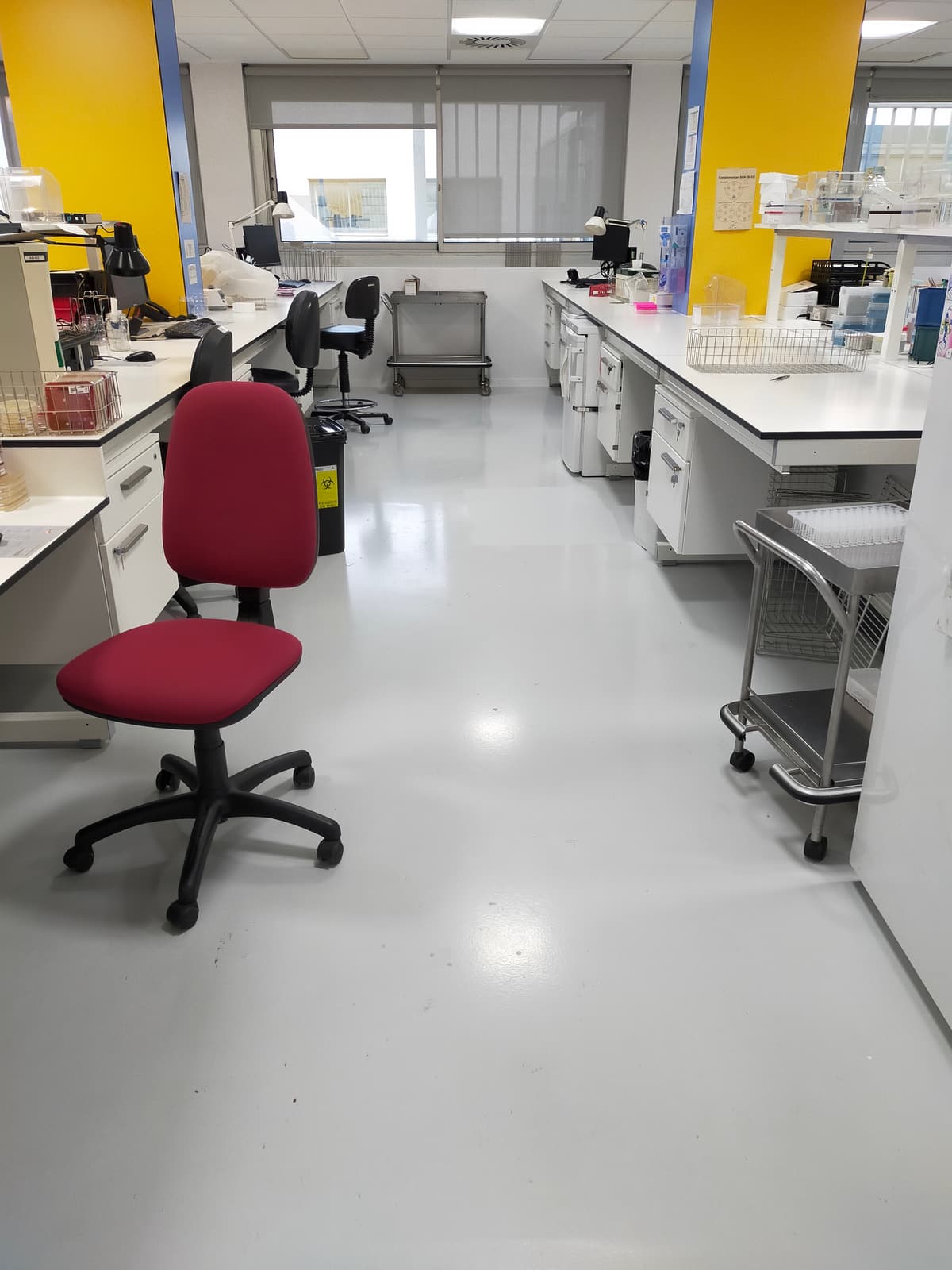
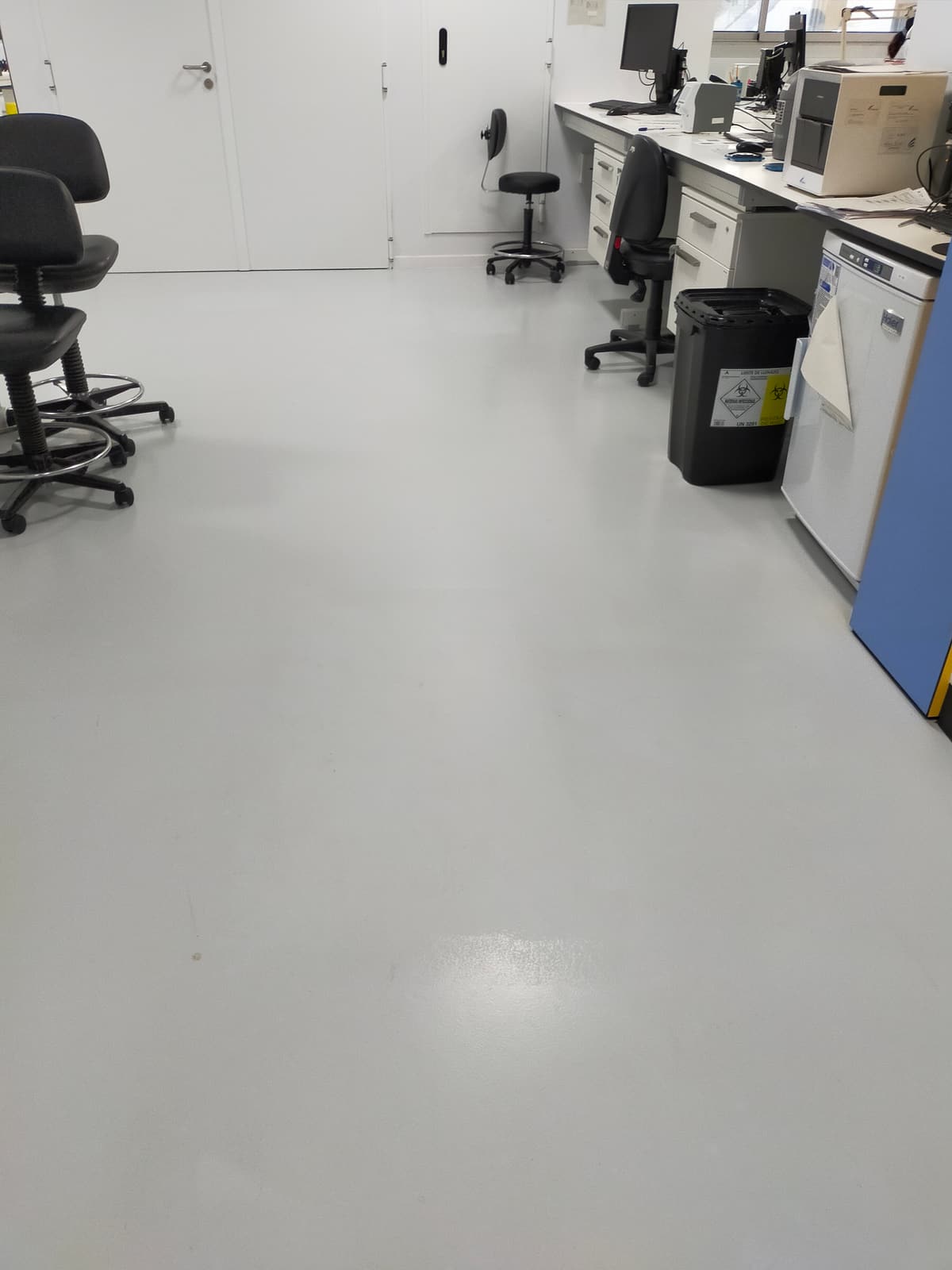
Hospital microbiology laboratory with the white seamless resin floor repaired
The laboratory in use with the seamless floor repaired: no joints, no colour change and easy to clean.
Project data

Technical sheet

Instalación
Microbiology laboratory of a hospital in the Barcelona metropolitan area
Problema
Areas of the seamless resin floor debonded, broken and a hygiene risk
Condición
Laboratory in use: work in cordoned-off zones, without stopping activity
Reparación
Cutting and boxing out, removal to sound substrate, perimeter sanding and epoxy primer
Pavimento
Self-levelling resin in the same colour, flush with the existing floor and jointless
Sistemas
Epoxy and self-levelling resins for seamless floors (Sikafloor® type ranges)
Plazo
From 8 to 18 July 2022, with the laboratory operating
Aplicador
From our network, approved by the manufacturer

Repairing a hospital laboratory floor in Barcelona

In the microbiology laboratory of a hospital in the Barcelona metropolitan area, the seamless resin floor had debonded and broken areas. In a laboratory that is not just cosmetic: every crack collects dirt and breaks the continuity a hygienic floor requires. For data protection reasons we do not name the hospital.

The condition was clear: the laboratory could not close. Work was done in cordoned-off zones between 8 and 18 July 2022, without stopping activity.

Why a well-made patch goes unnoticed

The usual mistake is simply filling the hole. Here each area was cut out as a rectangle, cleaned back to the substrate, the perimeter sanded so the new resin would bond to the old floor, primed with epoxy and filled with self-levelling resin in the same colour, flush. The result is a jointless resin floor, smooth and easy to disinfect.

Resin floors for hospitals, laboratories and industry

  • Epoxy: hard, chemically resistant and easy to clean.
  • Polyurethane: more elastic, better against impact and thermal shock.
  • Hygienic coving where floor meets wall, so there are no corners.

How we work: from enquiry to handover

On every project we take on whatever is needed, a single phase or the whole process:

  1. Technical enquiry. We receive photos, drawings and the problem, and reply with an initial assessment.
  2. Consulting and diagnosis. Site visit, testing and choice of the right system for the substrate and use.
  3. Specification and fixed-price quote for materials and execution.
  4. Execution by an approved applicator from our network, trained and approved by the system manufacturer.
  5. Site management and quality control: substrate, moisture, thickness, curing and detailing.
  6. Finishing, final documentation and handover.

Double guarantee: the manufacturer backs that the installed system meets its standards, and we guarantee it has been applied correctly. That is why our repairs, waterproofing and floors last for years.
Step by step

How a resin floor is repaired with the laboratory in use

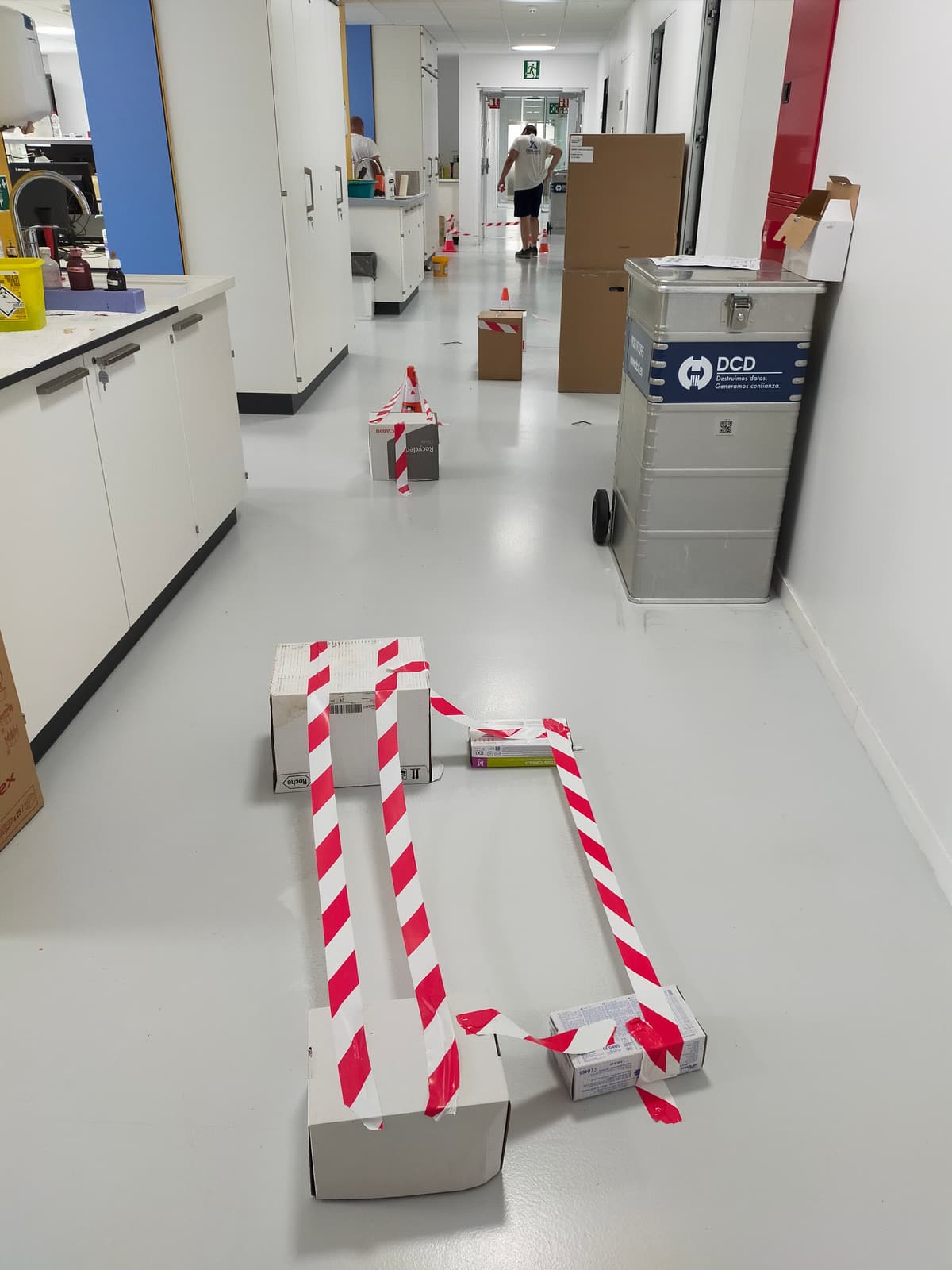
  1. Floor area cordoned off with tape while the laboratory stays in use
    Step 1

    Mark out and cordon off

    Damaged areas are marked out in rectangles and cordoned off so the laboratory keeps working.

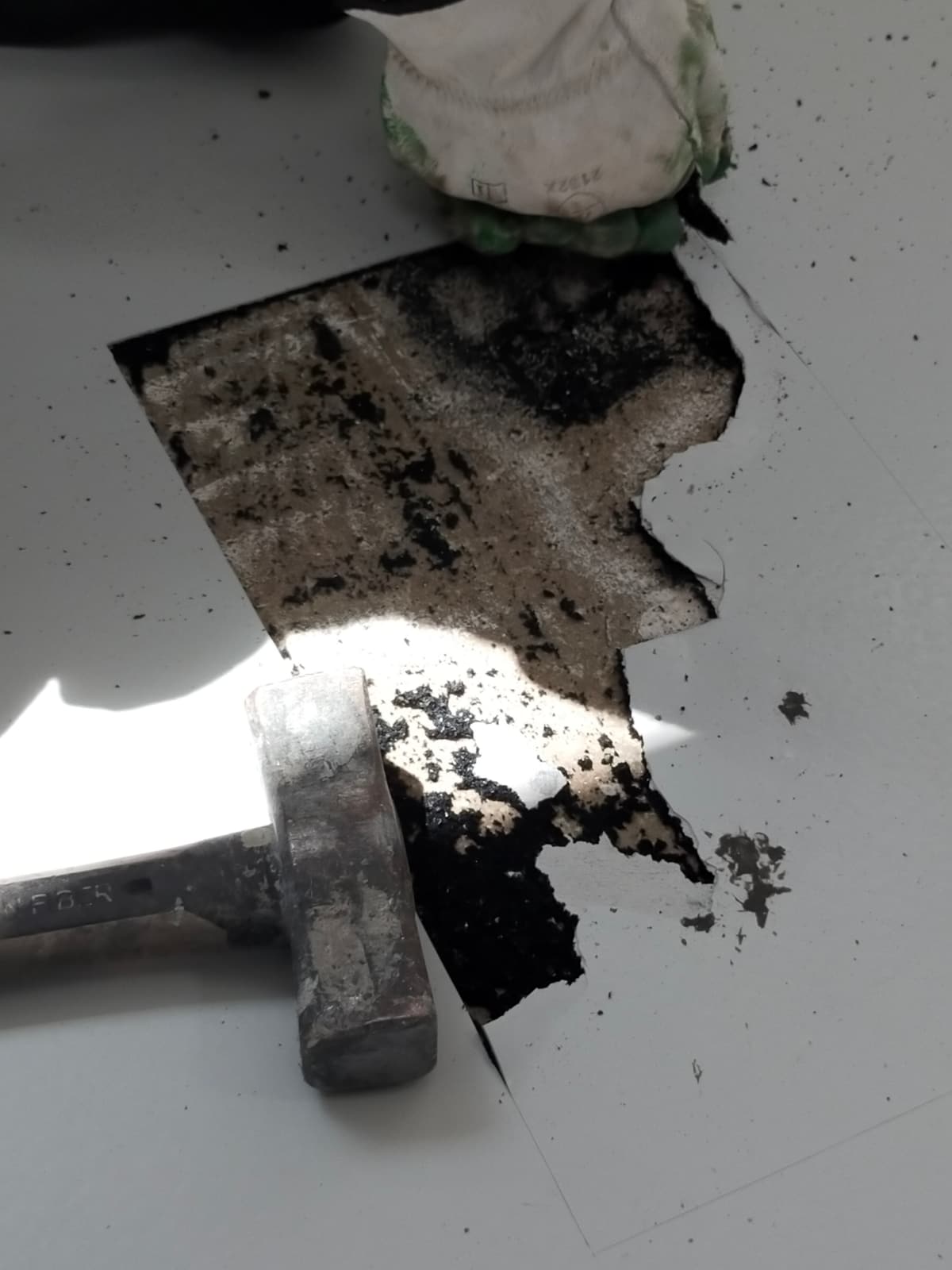
  2. Removing the debonded resin floor down to the concrete substrate
    Step 2

    Cut and clean out

    The outline is cut and the debonded resin removed down to a sound substrate.

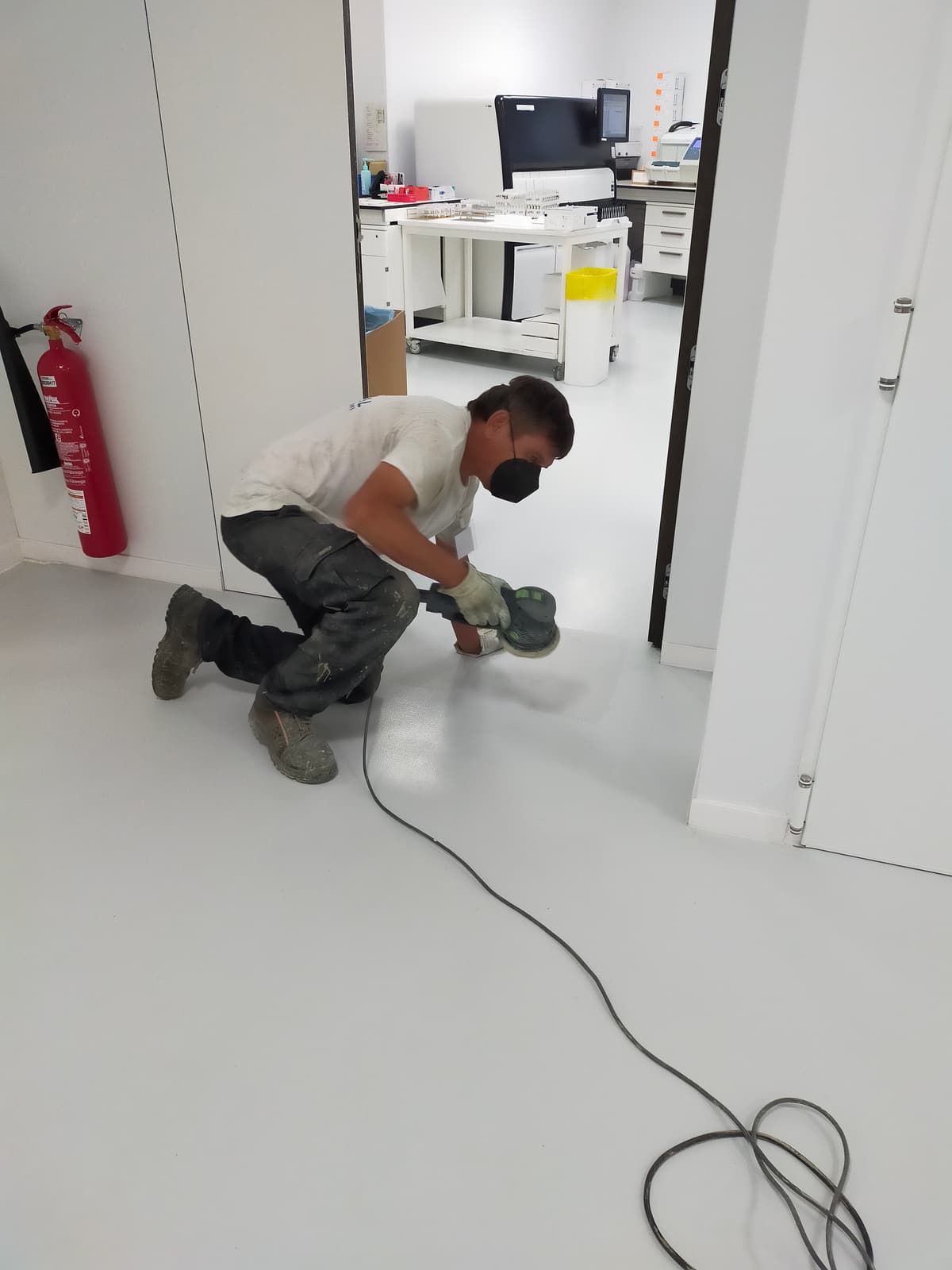
  3. Worker sanding the patch perimeter with a dust-extracted sander
    Step 3

    Prepare the substrate

    Dust-extracted sanding of the perimeter and base to open the surface and ensure adhesion.

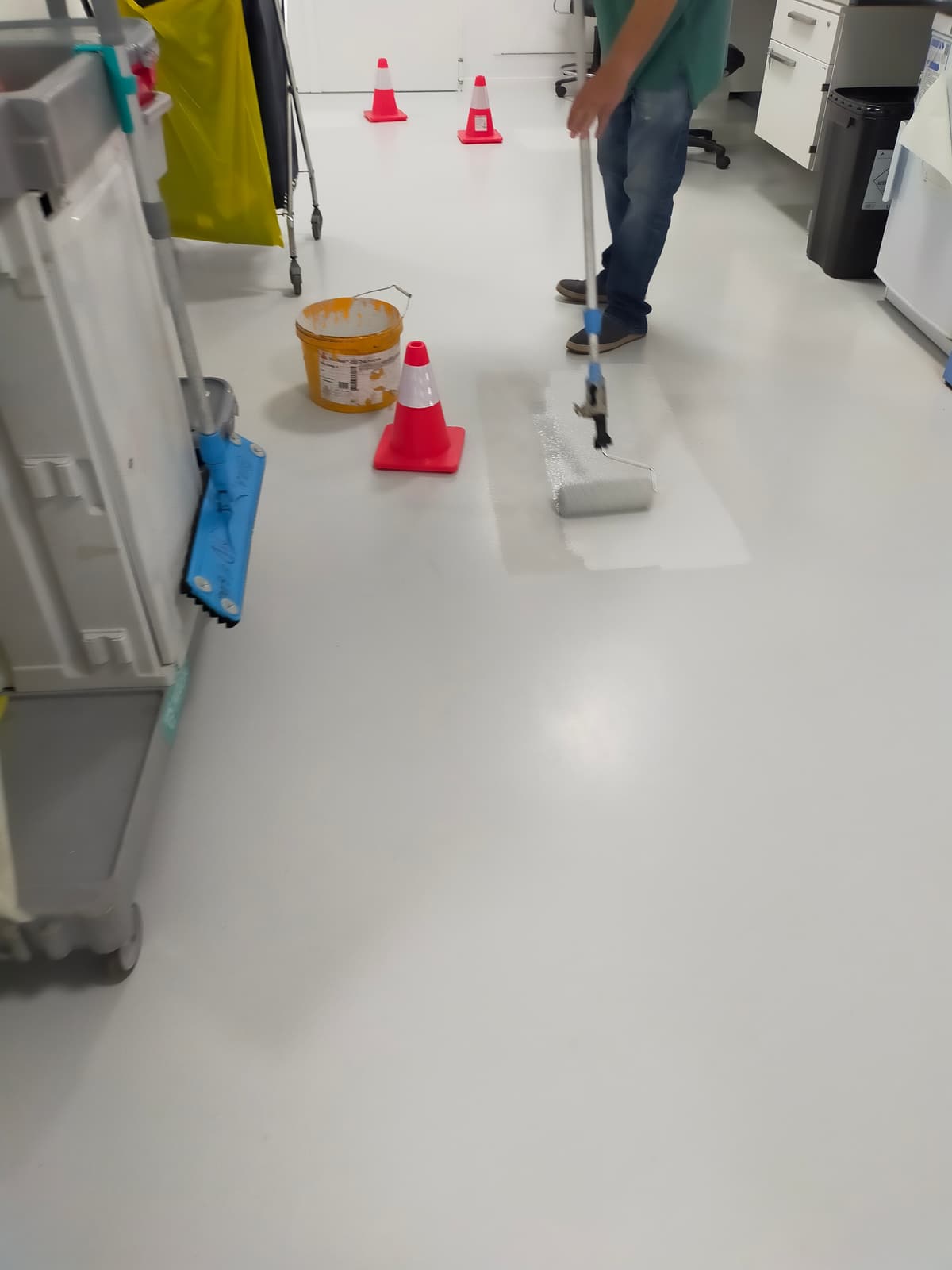
  4. Roller-applied epoxy primer in a cordoned-off zone of the laboratory
    Step 4

    Imprimar

    Epoxy primer on the concrete and the edge of the existing floor.

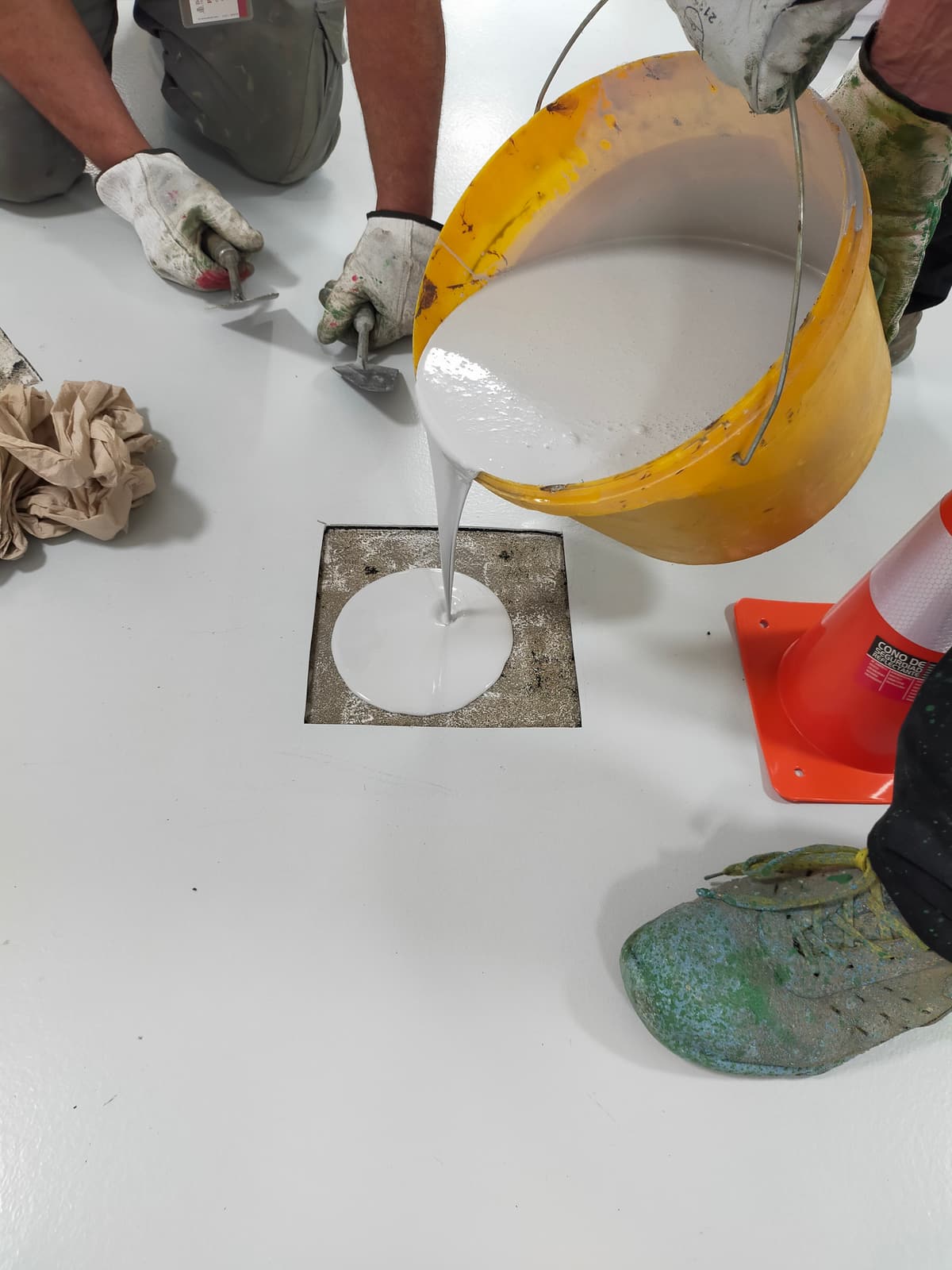
  5. Pouring white self-levelling resin into the floor cut-out
    Step 5

    Pour the self-levelling resin

    Poured and spread with a notched trowel until flush with the original floor.

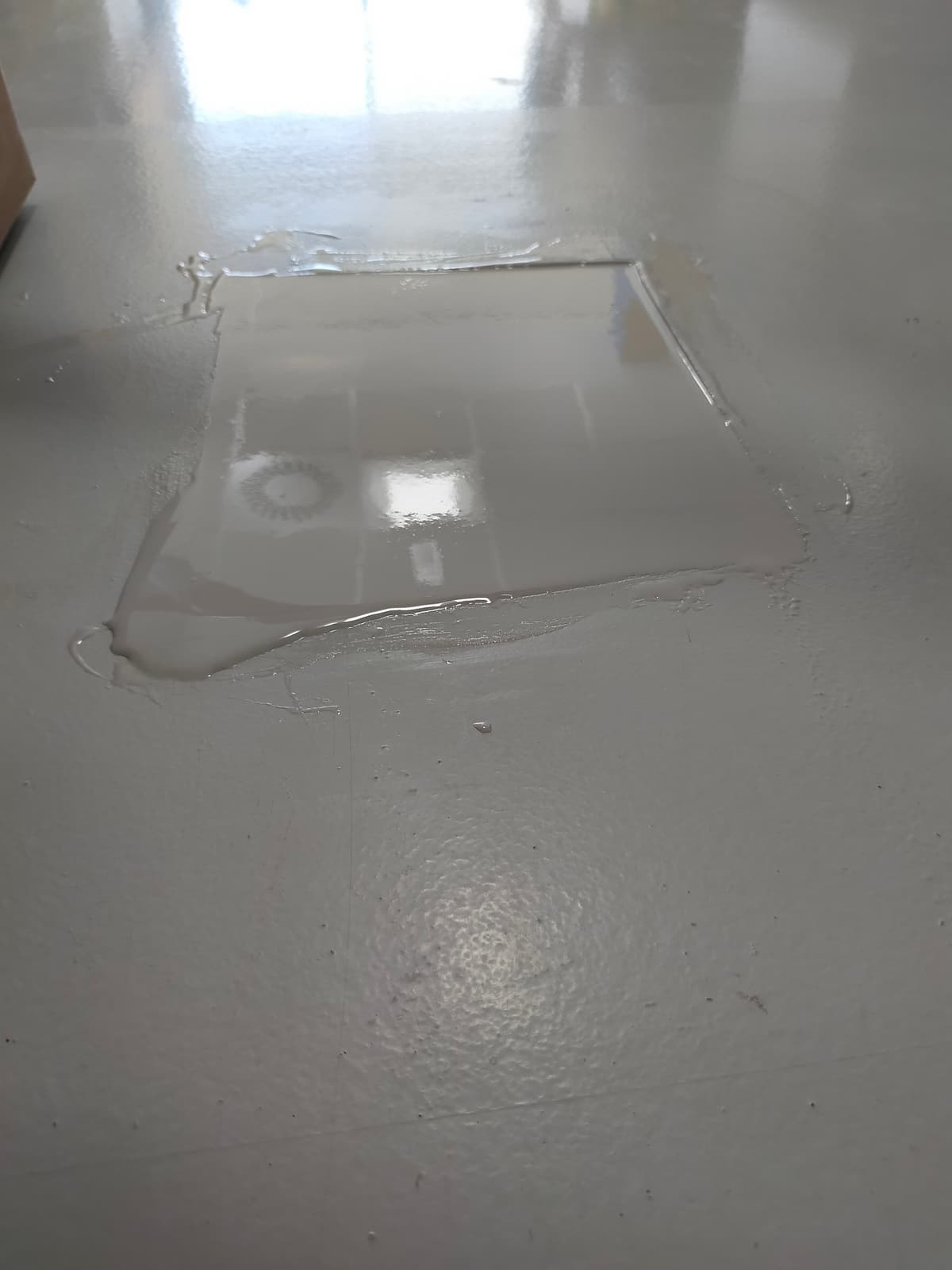
  6. Freshly applied seamless resin patch levelled with the existing floor
    Step 6

    Cure and return to use

    The resin cures and the zone reopens; the floor is seamless and jointless.

On-site record

Project photos

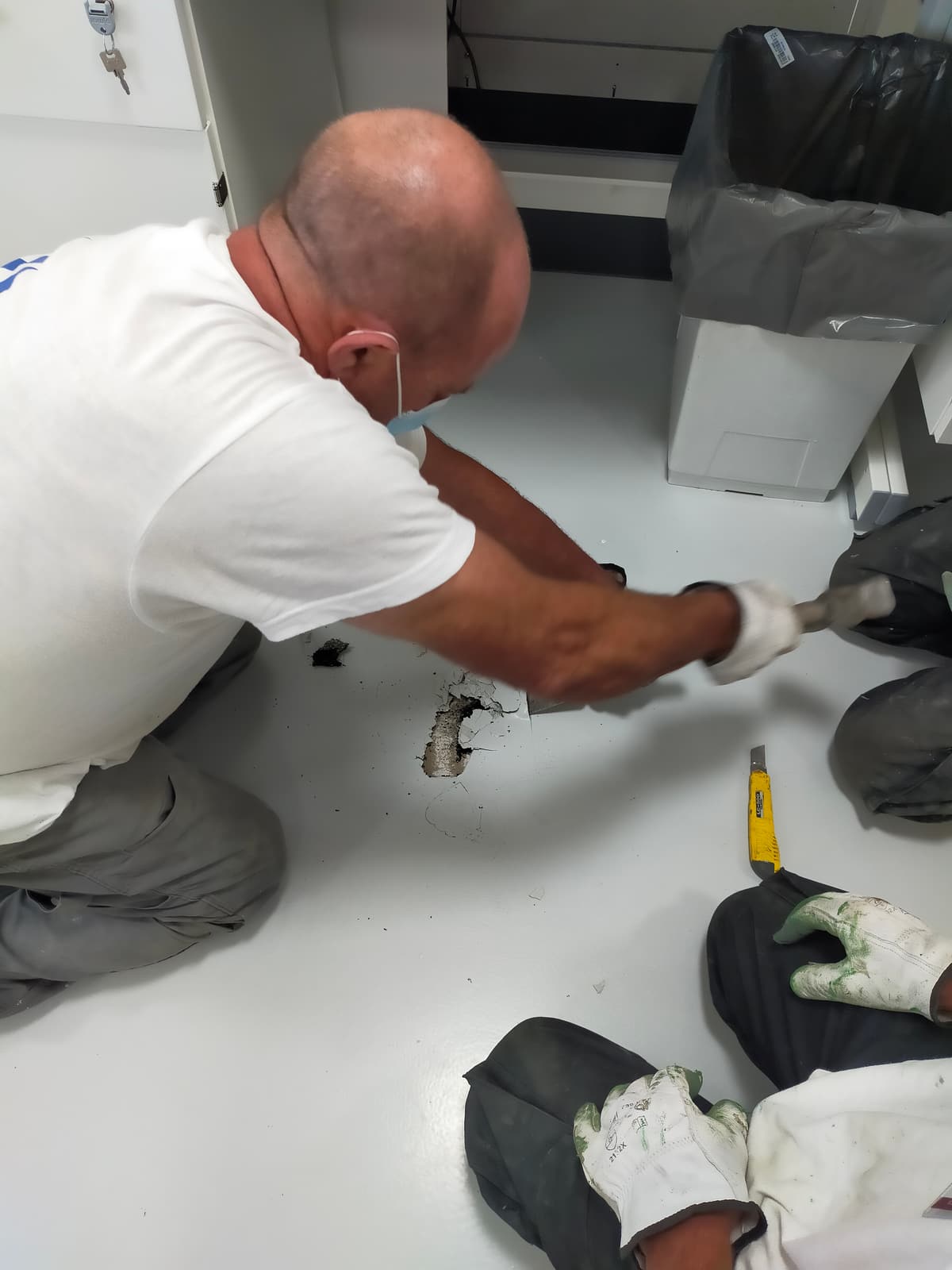
Worker cutting the damaged resin floor in a hospital laboratory
Cutting out the damaged floor: each area is marked out in clean rectangles to avoid weak edges.
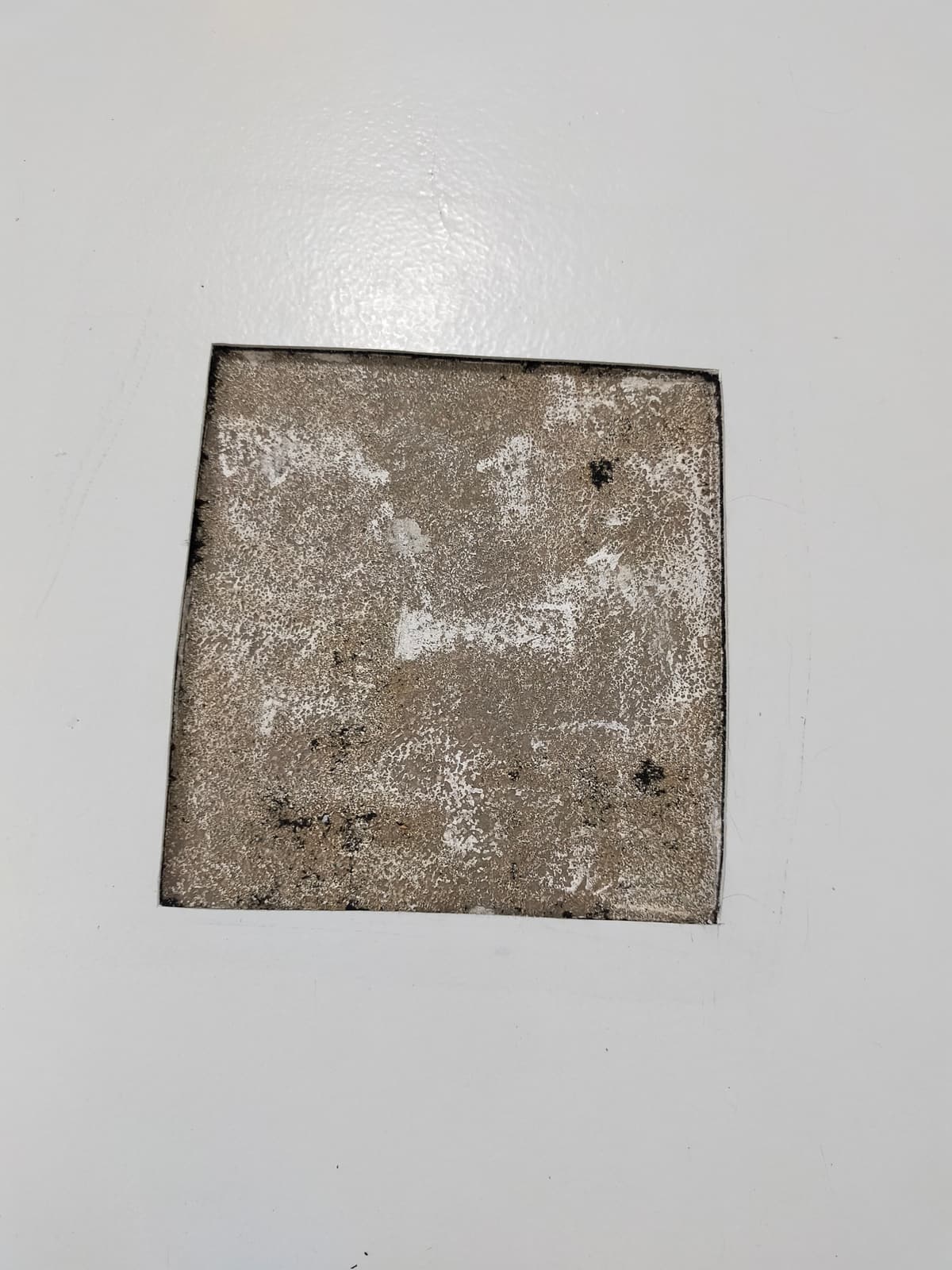
Rectangular cut-out cleaned in a resin floor, ready for priming
Cut-out cleaned, with straight edges so the patch does not debond.
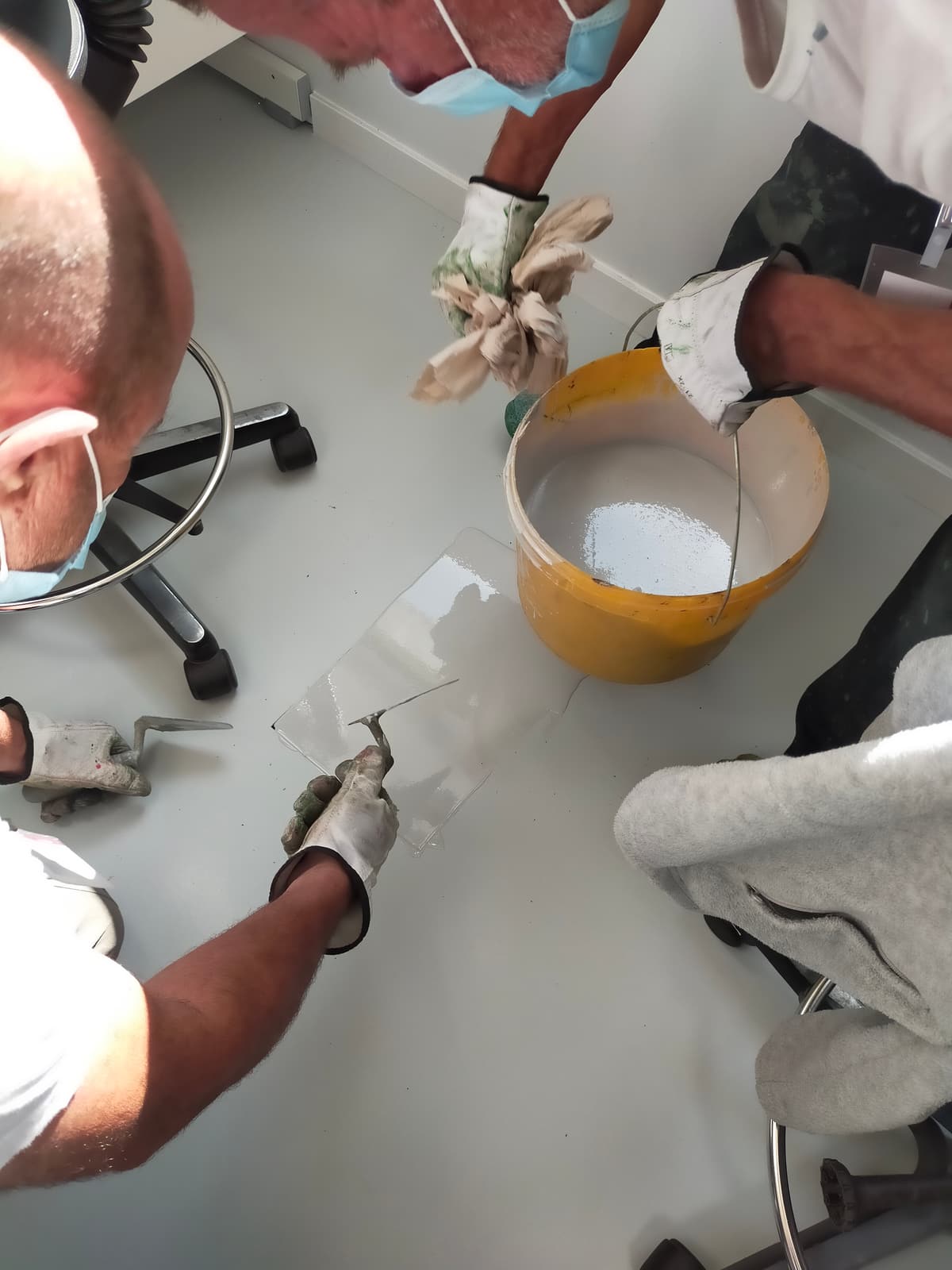
Spreading the self-levelling resin with a notched trowel in a laboratory floor
Spread with a notched trowel until flush with the existing floor.
Microbiology laboratory in use with workbenches and white seamless floor
The laboratory back in use, a few days after the repair.
Common questions

Frequently asked questions

Can a resin floor be repaired without replacing it all?

Yes, if the rest is well bonded. The damaged area is cut out, the substrate prepared and filled with a compatible resin of the same colour, flush with the existing floor.

Does the hospital or laboratory have to close?

No. Work is done in cordoned-off zones and at agreed times, so activity continues while each section is repaired.

Epoxy or polyurethane for a hospital?

It depends on use: epoxy gives hardness and chemical resistance; polyurethane is more elastic and copes better with impact and temperature changes. We decide in the diagnosis.

Why does a resin floor debond?

Almost always because of the substrate: moisture, surface laitance or missing primer. That is why we manage substrate preparation, which is what decides whether the floor lasts for years.

Who carries out the work?

An approved applicator from our network, trained and approved by the system manufacturer. We handle the consulting, the specification and site management, and we guarantee the system is properly applied.

Do you work outside Catalonia?

Yes. We work throughout Spain, especially in Catalonia, the Valencia region and Aragon, with approved applicators in each area.

Do you have a damaged resin floor in a hospital, laboratory or plant?

We assess the floor, specify a repair compatible with the existing system, an approved applicator carries it out and we manage the work without stopping your activity.

Request a technical study
Call WhatsApp Request a quote